Why the Market May Be Wrong About Rate Hikes: The Case for a Deflationary Outcome
News
|
Posted 24/06/2026
|
2730
Key Takeaways
- Markets are currently pricing in rate hikes over the next 18 months, but inflation, unemployment and US bond market signals build a strong case that the odds of rate cuts are higher than consensus.
- A rate of change in oil above 100 has historically preceded deflationary periods, and oil breaking down from its early-April spike could ease inflation in the short term.
- The US bond market, not the Fed or equities, may have the final say: the 10-year yield is consolidating toward a breakout, and a break to the downside would be bullish for bonds and consistent with rate cuts.
- A deflationary move into the next liquidity cycle could be a window for precious metals investors to build positions at high value prices ahead of the next round of asset price inflation.
While the markets are currently pricing in rate hikes over the upcoming 18 months and the US Fed has dropped “forward guidance,” taking a closer look at inflation, unemployment and the US bond market creates a strong view that the odds of rate cuts may be far higher, and that the markets could be offside on this expectation. The real risk being a deflationary outcome and spiking unemployment if the central banks over-tighten here.
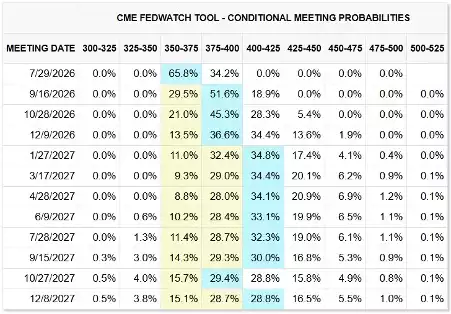
Currently it appears the fear of a resurgence of inflation is largely driven by the spike in oil. However, with the oil chart breaking down in early April, the fears of consistently high energy prices can arguably be put to bed for now (long term, oil has a long way up to go later this decade).
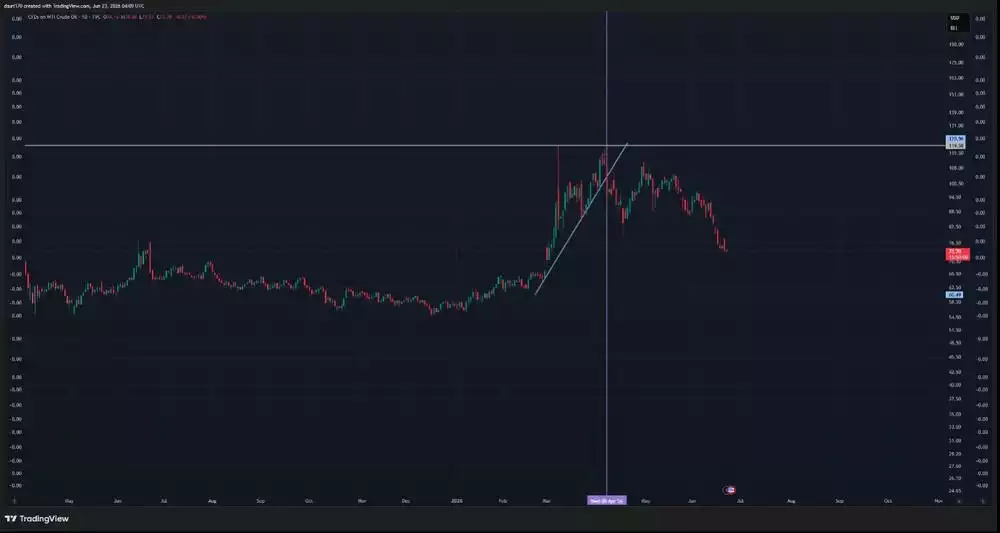
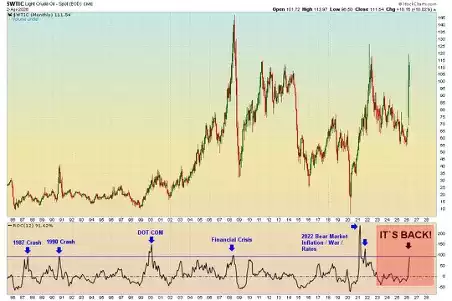
This should bring inflation down in the short term. Moreover, the rate of change of oil, being well over 100 on the chart below, has historically been followed by deflationary periods almost without exception. It’s important to note that a slow and steady rise in oil prices is inflationary as it makes its way through the economy, however a sudden spike can be deflationary due to the immediate and sudden impact on the consumer.
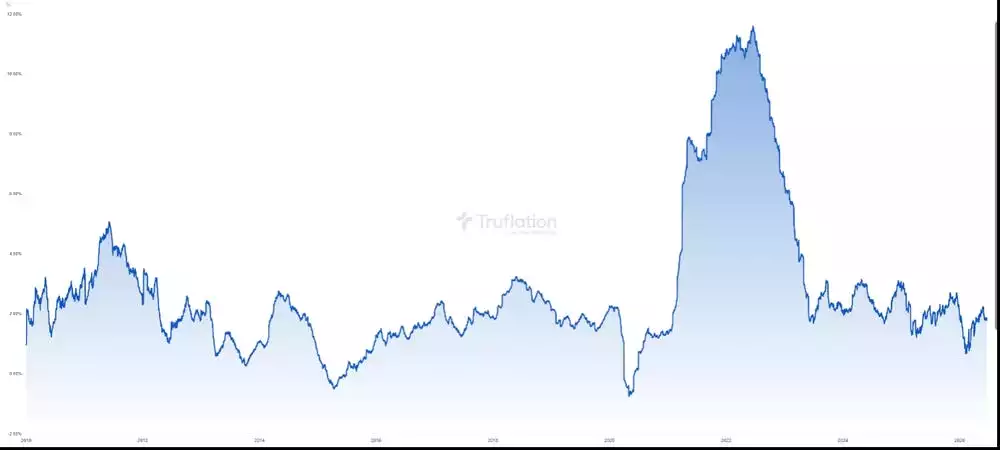
Looking at Truflation specifically, while the short term uptrend has market participants spooked, zooming out we can see the downtrend largely intact with lower highs and lower lows.

Looking at unemployment, the data has not only been unreliable over the last year with consistent upward revisions, the steady current uptrend is also characteristic of phases preceding a spike in unemployment and a recession, marked below.
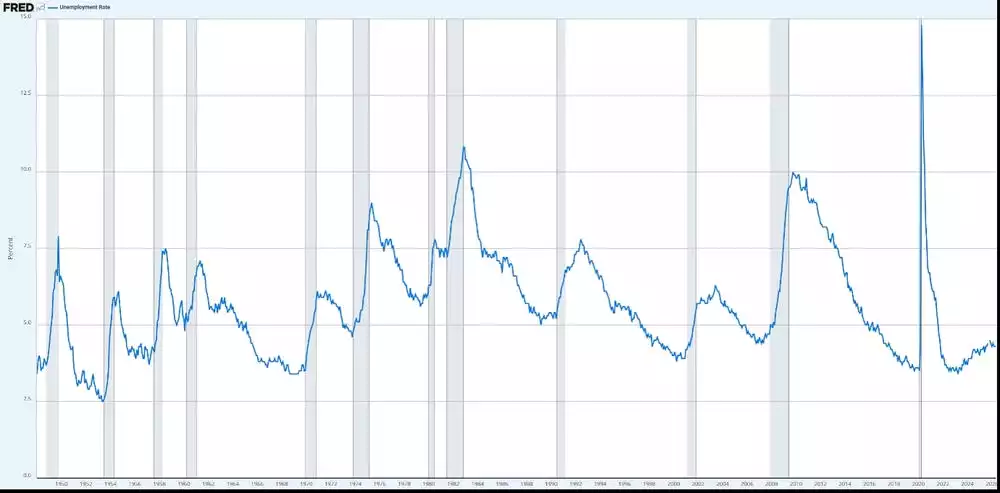
Meanwhile the SP500 has closed below its daily cycle, and with new Fed chair Kevin Warsh paying overt attention to stocks after also intimating he will not be providing much forward guidance on rate decisions, it is fair to say that the SP500 could further skew the likelihood of rate cuts, in addition to the inflation downtrend and unemployment uptrend.
However, regardless of the macro landscape or the stock markets, the final say comes from the most powerful markets in the world, the US bond markets. If bond yields shoot up, rate cuts are unlikely. With the yield on the 10 year consolidating over the course of this liquidity cycle, a breakout is building, and while many are writing off buying bonds, a break to the downside would see a bullish move in bonds, with rates most likely conceding to the downside in conjunction.
While the first few cuts would provide an initial tailwind to property and risk assets, with the Fed having been overly restrictive for too long, a deflationary move would quite likely accompany the remaining cutting cycle. This deflationary phase could lead into a genuine Fed pivot on monetary policy, the next liquidity cycle, and another round of bullish price action for hard assets like gold and silver, presenting as asset price inflation in real time, with consumer price inflation lagging by 12 to 18 months.
Once we see a meaningful resurgence in CPI (12 to 18 months from the beginning of the next liquidity cycle), we should see a hawkish pivot in Fed policy, marking the peak of the asset price inflation before consolidation into the following macro cycle.
SP500 major 4 year lows, precious metals half cycle lows, Bitcoin’s 4 year lows and oil’s cycle lows are all due between Q4 2026 and Q1 2027, cycles that further back up the macroeconomic and technical landscape of the asset price deflation expectation.
Finally, the US10Y rolling over amid rate cuts is characteristic of a flight to safety landscape where investors are rushing into bonds, usually seen amid asset price deflation. With peak bearish sentiment on bonds recorded recently, a major cycle low for US bonds could be in, with an uptrend coming up (marked by a downtrend in yields).
This move into the next liquidity cycle, while marked by turbulence, could be a significant opportunity for precious metals investors to build positions at high value prices, before the next round of liquidity injection and asset price inflation. Ainslie Bullion’s gold and silver bullion range offers a way to position into hard assets ahead of that cycle.
This article is general information only and does not constitute financial advice. Past performance is not indicative of future results. Always conduct your own research or consult a licensed financial adviser before making investment decisions.