What a September Fed Rate Hike Could Mean for Gold
News
|
Posted 15/09/2026
|
1841
Key Takeaways
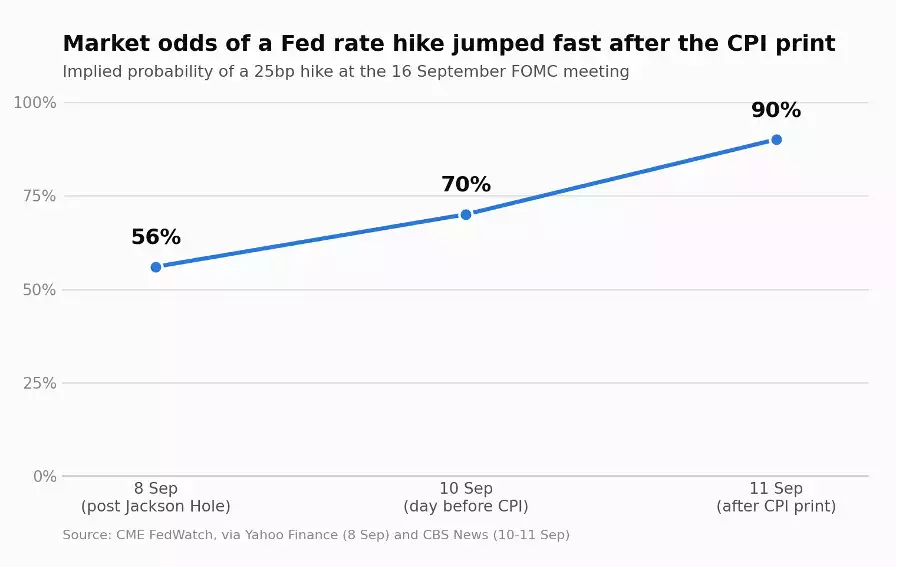
- Markets now price a roughly 90% chance of a Federal Reserve rate hike on 16 September, up sharply from about 70% before Friday's inflation data.
- Hotter than expected August inflation, driven largely by surging petrol prices, is behind the shift.
- Gold and silver have pulled back as rate-hike bets firmed, extending a third straight weekly decline.
- Oil above US$100 a barrel, tied to Middle East supply disruption, is adding to the inflation pressure the Fed is watching.
A hike, not a cut, is now the base case
The Federal Reserve looks likely to raise its policy rate at this week's meeting rather than continue easing. Following Friday's inflation data, the probability of a 25 basis point hike on 16 September jumped to almost 90%, up from around 70% the day before, according to CME FedWatch data cited by CBS News.
That is an unusual direction for markets to be pricing. It follows a July meeting where the Fed held rates steady despite three committee members dissenting in favour of a hike. Markets read that hold as tolerance for above-target inflation, a read that Fed chair Kevin Warsh's limited forward guidance did little to dispel, according to Chase's market commentary. Warsh, confirmed by the Senate in May and sworn in as Fed chair shortly after, is now facing an early test of the central bank's inflation-fighting credibility.
What the inflation data showed
August's Consumer Price Index rose 3.4% year on year, matching July's reading but coming in above the 3.3% economists had forecast. Core inflation, which strips out food and energy, climbed 0.3% month on month, an acceleration from July's 0.2% rise.
Petrol did much of the damage. Gasoline prices were up 27.4% over the year, feeding directly into the headline number.
Energy is doing most of the work
Behind the inflation surprise sits a familiar driver: oil. West Texas Intermediate crude climbed above US$102 a barrel and Brent above US$107 on Monday, both up more than 2% on the day, after Houthi attacks on Saudi facilities disrupted pipeline supply.
Strategists have also pointed to slower than expected normalisation of shipping around the Strait of Hormuz amid the broader Iran-linked conflict, warning oil could push toward US$120 a barrel if disruptions persist.
How gold and silver have reacted
Gold fell to its lowest level in more than a month on Monday, trading around US$4,295 an ounce and marking a third consecutive weekly decline. Silver fell further again, down almost 3% to around US$63.33 an ounce.
In Australian dollar terms, the Perth Mint was quoting gold at A$6,109.52 an ounce and silver at A$90.83 an ounce as of Monday morning local time.
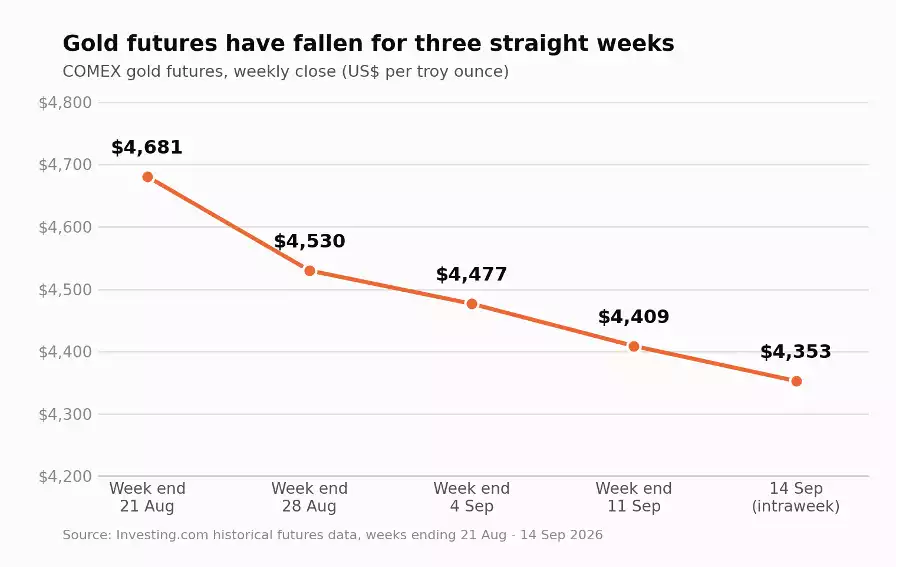
The pullback fits a well-documented pattern: a stronger US dollar and rising expected returns on cash and bonds tend to pressure gold prices in the short term. That said, gold remains up close to 17% over the past year, so this month's softness comes against a strong 12-month run rather than a change in the metal's longer-term drivers.
What it means for investors
A rate decision built on a single hot inflation print, in a market already jumpy about energy supply, is a reminder that central bank paths can shift quickly in either direction. Whether this week's move proves to be a one-off adjustment or the start of a longer tightening stretch will likely matter more for gold and silver over coming months than Wednesday's single decision.
For investors who prefer to build a position steadily through periods of volatility rather than time individual announcements, regular dollar-cost averaged purchases remain a common approach to gold and silver accumulation.
This article is general information only and does not constitute financial advice. Past performance is not indicative of future results. Always conduct your own research or consult a licensed financial adviser before making investment decisions.