Unemployment and Low Inflation Open Door to QE
News
|
Posted 04/03/2026
|
1296
Inflation continues to trend lower. US CPI is currently 0.86%, according to Truflation.
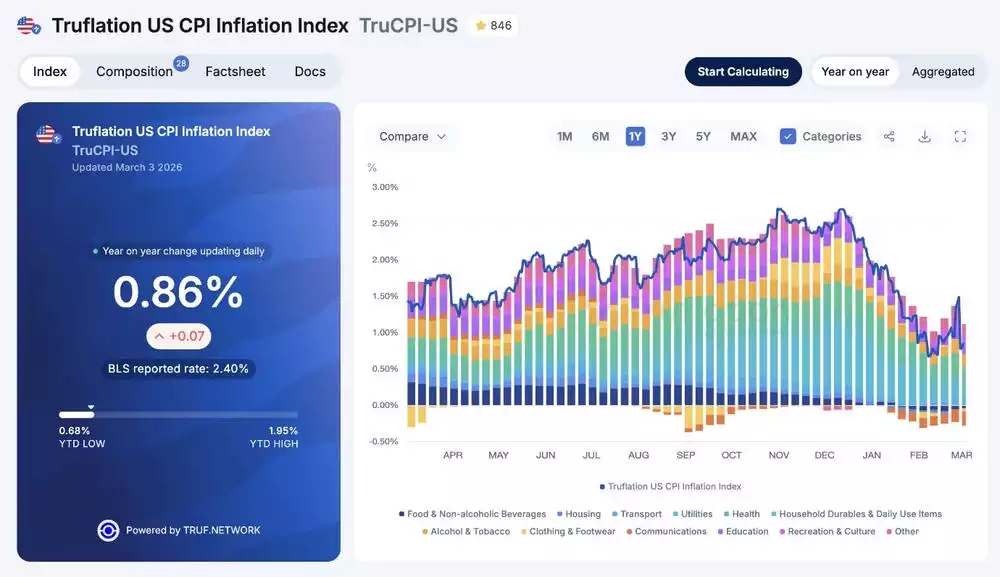
Recent increases across the commodities sector have not yet flowed through to consumer utilities. However, gas prices have risen in the short term, which may lift food and goods prices via higher transport costs.
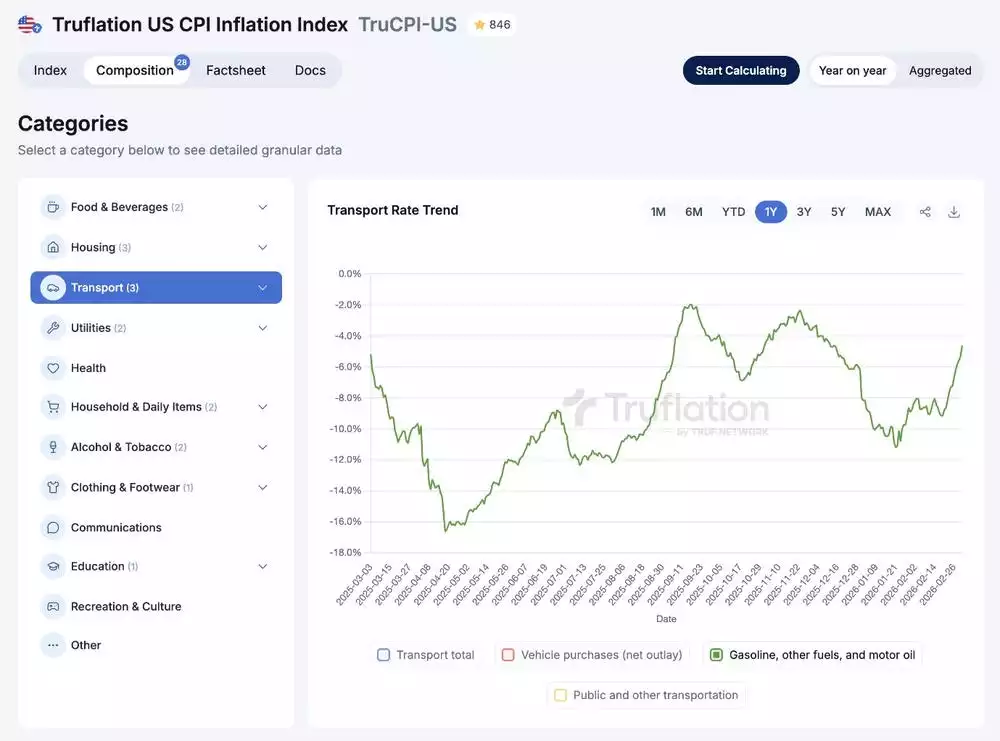
Food remains in slight deflation, alongside clothing and communications. Housing is currently recording 0% inflation, an improvement from the deflationary readings seen in January and February.
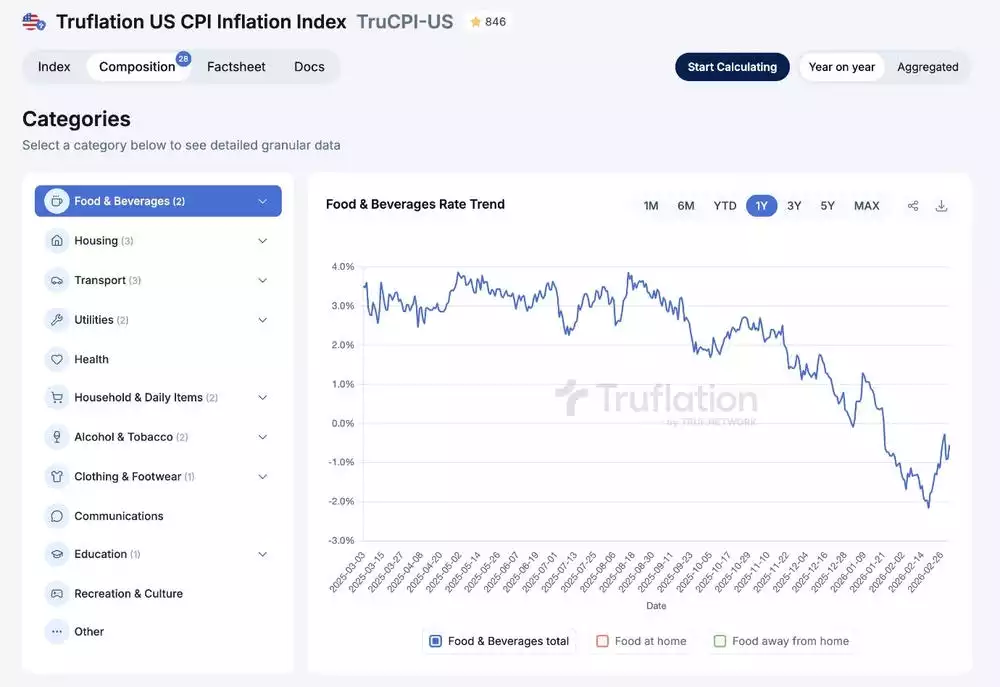
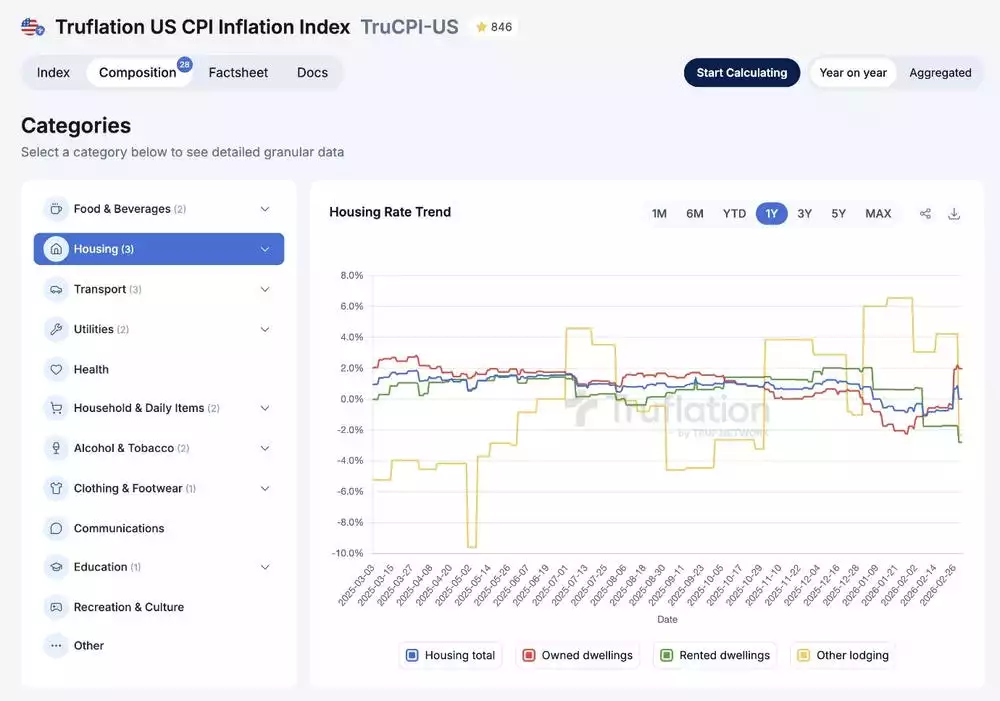
Overall, the near-term risk to markets appears to be deflation rather than inflation, particularly with unemployment continuing to trend higher. That trend may accelerate further as AI adoption expands.
This backdrop supports a decisive shift towards monetary easing by the US Federal Reserve. Depending on the degree of financial market instability, the scale of that easing could be substantial. A deflationary shock alongside a pullback in major equity markets would provide the conditions for liquidity measures similar to those deployed during 2020.
With US government debt at elevated levels, policymakers face growing pressure. Over the long term, inflating away dollar-denominated debt through currency debasement remains a powerful incentive. A short-term deflationary event would likely provide the policy cover for renewed stimulus, reinforcing longer-term inflationary pressures.
While we remain alert to short-term deflation risks, the broader macro setting continues to favour ongoing US dollar devaluation over time. In that environment, scarce hard assets such as gold and silver remain structurally well positioned.
For households holding the bulk of their savings in currency, persistent debasement erodes purchasing power year after year. Assets that meet the core characteristics of money, being uniform, divisible, portable, durable and limited in supply, offer a different outcome. Gold and silver meet those criteria. Fiat currency does not.