Silver's Buying Window Is Opening
News
|
Posted 07/05/2026
|
3696
Key Takeaways:
- Silver is currently within the daily cycle low timing window, with three of four confirmation signals already in place.
- A confirmed daily cycle low would represent a high-value, short-duration entry point for both short and long-term investors.
- Silver remains in the middle of an 8-year macro cycle (2022-2030), with 2026 marking the macro half-cycle low, characterised by consolidation, volatility, and pullback opportunities.
- The gold-to-silver ratio sits at approximately 62 as of early May 2026; ratios above 50 have historically preceded extended periods of silver outperformance.
After tracking the recent silver weekly cycle low and the upcoming daily cycle as opportunities over the past few weeks, silver is currently in the middle of the daily cycle low window, with a high probability candidate within view.
From a technical standpoint, the signals for a daily cycle low are:
- Forming within the timing window (rare exceptions, half-cycle low inversions, and outlier examples can override these)
- A bullish momentum cross — indicators like the DSS Bressert can show this
- A swing low pattern
- A trendline break
Looking at the chart, silver is currently within the timing window and has already confirmed both a swing low pattern and a trendline break. Once the DSS Bressert crosses to the upside, a high probability daily cycle low is confirmed — providing both short and long-term investors with a high-value entry point.
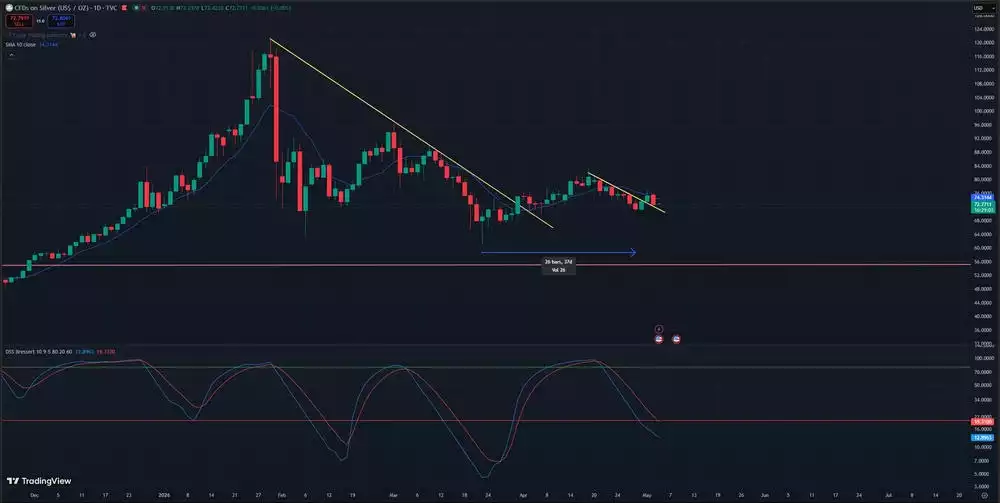
After a confirmed daily cycle low, it is reasonable to expect upside momentum in the short term, making this a value entry that does not last long after confirmation.
While most investors wait for the market to convince them to enter with upside price action, cycle traders are able to spot high-value, low-risk entries ahead of time.
The macro picture
With silver being halfway through the macro 8-year cycle (2022-2030), 2026 is the year of the macro half-cycle low, which overall involves consolidation, volatility, and opportunities on pullbacks for the long-term allocation.
It is therefore fair to say that even if this daily cycle low yields to a lower low later this year (as the macro half-cycle low) — of which there is no guarantee, as the half-cycle low could form at a higher price level than the current daily cycle low — the current decline still presents as a significant opportunity within the larger 8-year cycle.
The gold-to-silver ratio
With the gold-to-silver ratio sitting at approximately 62 as of early May 2026, and an expectation for this ratio to fall in the decades to come, any pullbacks in silver this year with a gold-to-silver ratio above 50 are clear long-term opportunities to dollar cost average into the market.
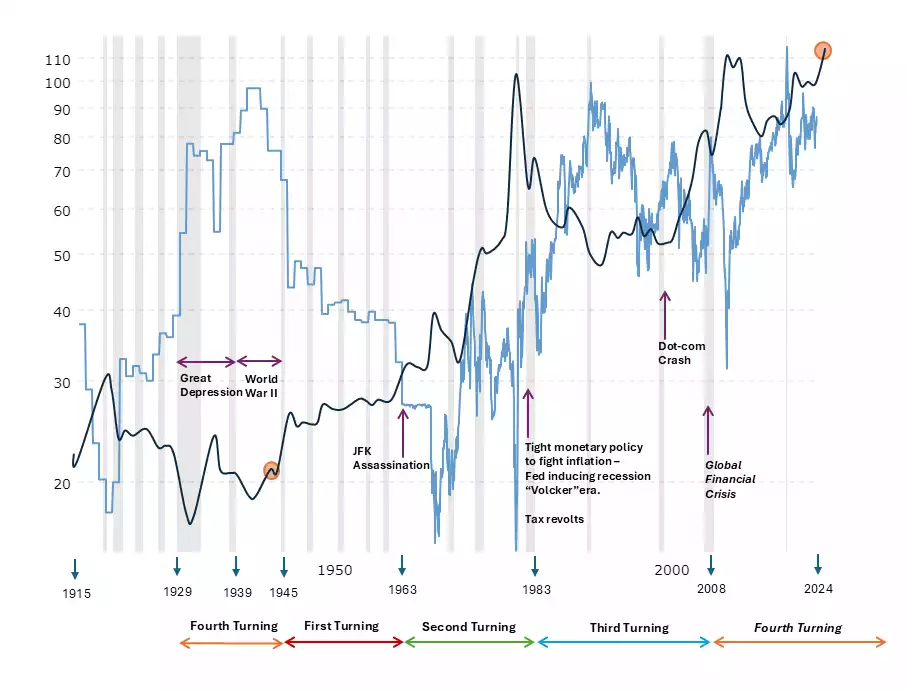
The chart above shows how the gold-to-silver ratio behaved over the current 80-year socioeconomic cycle known as the Fourth Turning. The previous Fourth Turning, which ended in WWII, saw the ratio fall sharply after its completion. The ratio then spent approximately 40 years below 50, which is the expectation for the 2030-2070 period.
Picking up silver on pullbacks, at a gold-to-silver ratio above 50, is a trade with generational timeframes in mind.
A slow and steady dollar cost average approach allows investors to take advantage of market pullbacks as they present themselves.
This article is general information only and does not constitute financial advice. Past performance is not indicative of future results. Always conduct your own research or consult a licensed financial adviser before making investment decisions.