Silver Recovers as Supply Issues Have no Solution
News
|
Posted 21/09/2026
|
2261
Key Takeaways
- Silver has recovered to around US$66 an ounce after a mid-September dip.
- The silver market is on track for a sixth consecutive annual deficit.
- Solar makers are using less silver, so investor buying carries more weight.
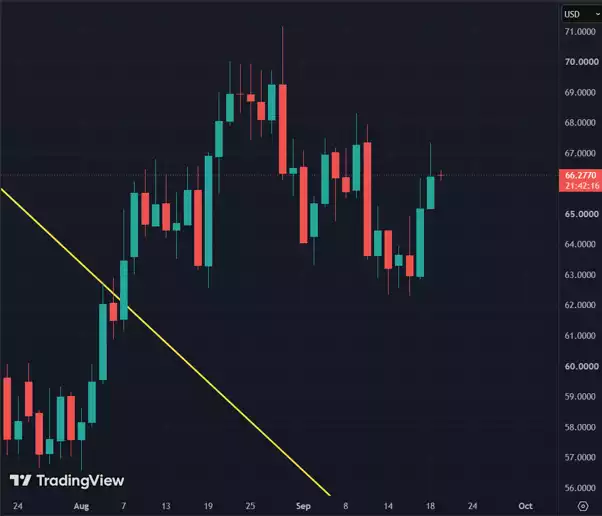
Silver has climbed back towards US$66 an ounce after falling close to US$63 earlier in September, closing at US$66.25 on 18 September 2026 (USA Today). It approached US$70 in late August, trading at US$69.15 on 24 August 2026 (USA Today), then gave back much of that increase during a rough patch for precious metals. The recent rise has brought those earlier highs back into focus, although the recovery is still developing.
The price move comes against a market in which demand has exceeded supply for five consecutive years. The Silver Institute’s World Silver Survey 2026, published on 15 April 2026, forecasts a further 46.3 million ounce deficit this year. Mine output is expected to remain broadly flat, while demand for silver bars and coins is projected to rise by 18%. Existing inventories have helped bridge previous shortfalls, but another deficit would add to the draw on those stocks.
Silver also has a substantial industrial market. Its conductivity makes it useful in electronics, vehicles and electrical infrastructure, giving it a source of demand beyond precious metals investment. That demand is changing, however. Solar manufacturers are using less silver in each panel to control costs, and the Silver Institute expects overall industrial consumption to decline in 2026, down 3% to 639.6 million ounces (Metal.com). That means investment demand is therefore playing a larger role in the market’s outlook even as some industrial uses soften. Investment buyers, unlike manufacturers, have no commercial reason to engineer silver out of a supply chain, so a market led by monetary demand faces less pressure to substitute the metal away.
Whether that continues to happen or not, supply constraints are real and industries that use silver may have to either fork over more money or put in the work finding alternatives. The solar industry moving to use less silver still does not fix the deficit the Silver Institute already projects.
That forecast does carry a condition. Most of the 2026 deficit rests on retail buyers returning, and US Mint bullion sales through June were annualising near 9.6 million ounces against 11.57 million for all of 2025 (FXStreet, 8 September 2026).
The next test is whether silver can sustain the recovery and challenge its late-August highs. A stronger US dollar or higher bond yields could interrupt the move, while continued interest in physical silver could reinforce it. For Australians buying physical metal through Ainslie Bullion, changes in the exchange rate will also influence the local price, independently of moves in the US dollar silver market.
_______________________________________________
This article is general information only and does not constitute financial advice. Past performance is not indicative of future results. Always conduct your own research or consult a licensed financial adviser before making investment decisions.