Silver-Gold Price Compression – Silver Market in Deficit
News
|
Posted 03/03/2026
|
7142
Bank of America has issued one of its more assertive silver forecasts in recent years. Michael Widmer, the bank’s Head of Metals Research, has outlined a target range of US$135 to US$309 per ounce.
US$135 following the recent US$121 high appears achievable. US$309, however, would require a material shift in market dynamics.
The wide range reflects potential moves in the gold–silver ratio, currently sitting near 60:1. In 2011 it compressed to 32:1, and during the Silver Thursday episode driven by the Hunt brothers, the ratio briefly touched 14:1.
The question is whether Widmer’s projection is simply speculative or grounded in the structural realities of the gold–silver relationship.
Silver is Used. Gold is Saved.
The argument for a tighter gold–silver ratio can be made on several fronts.
In the earth’s crust, silver is estimated to occur at a ratio of roughly 19:1 relative to gold. Yet annual mine production tells a different story. Gold output sits around 3,000 metric tonnes per year, while silver production is closer to 33,000 tonnes, a ratio nearer 11:1.
Above ground dynamics further complicate the picture.
Gold is largely stored and accumulated. Its industrial usage is limited relative to total supply. Silver, by contrast, is consumed. Approximately half of annual silver production is used in industrial applications. While some is recycled, advances in solar technology, electronics and other silver intensive industries have reduced the amount of silver used per unit. That makes recovery less economical and increasingly difficult.
On this basis, some estimates suggest the effective above ground availability ratio may be closer to 6:1.
Looking at exchange inventories reinforces the point. COMEX warehouses currently report approximately 33.2 million ounces of gold and 358 million ounces of silver, again around 11:1.
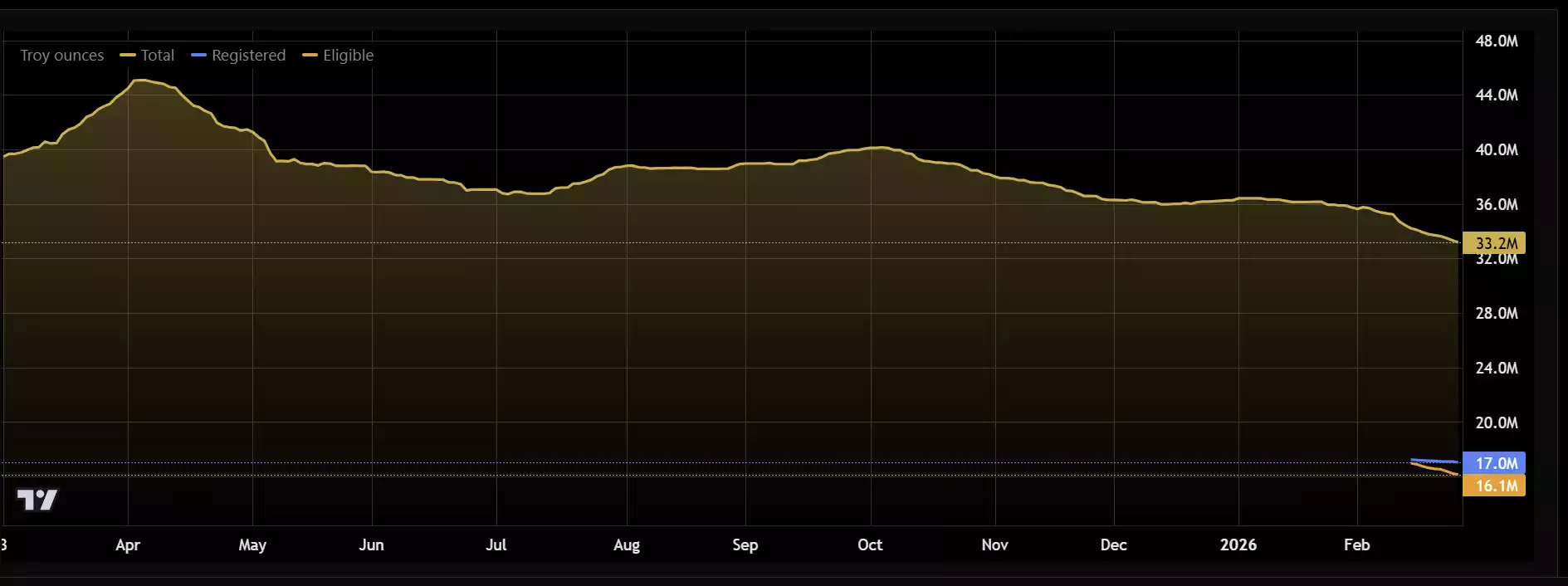
Against this backdrop, Bank of America’s 14:1 ratio scenario appears less extreme, particularly if industrial demand tightens further.
Shanghai vs COMEX Stock Levels
The Shanghai Futures Exchange continues to trade silver at a notable premium to the COMEX, with the spread recently widening to around US$12 per ounce.
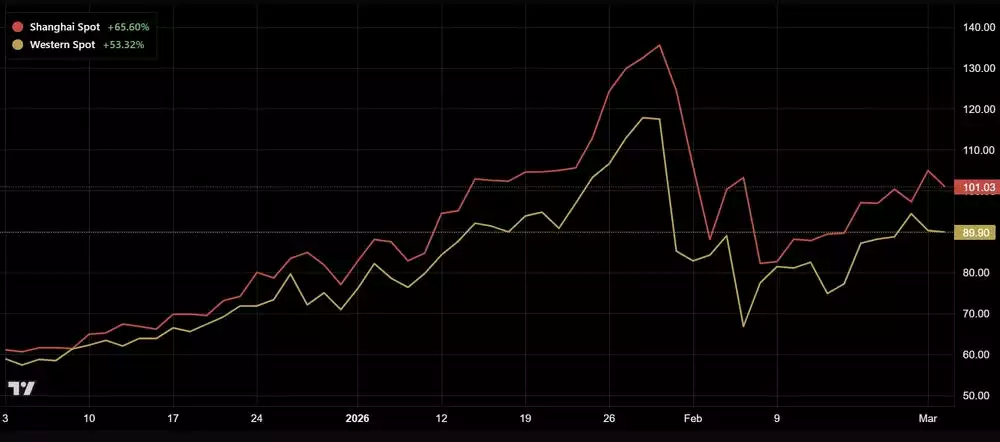
Shanghai operates as a predominantly physical market, whereas COMEX facilitates both paper and physical trading. The pricing divergence appears to reflect this structural difference.
More telling, however, is the decline in physical stock across both exchanges over the past year.
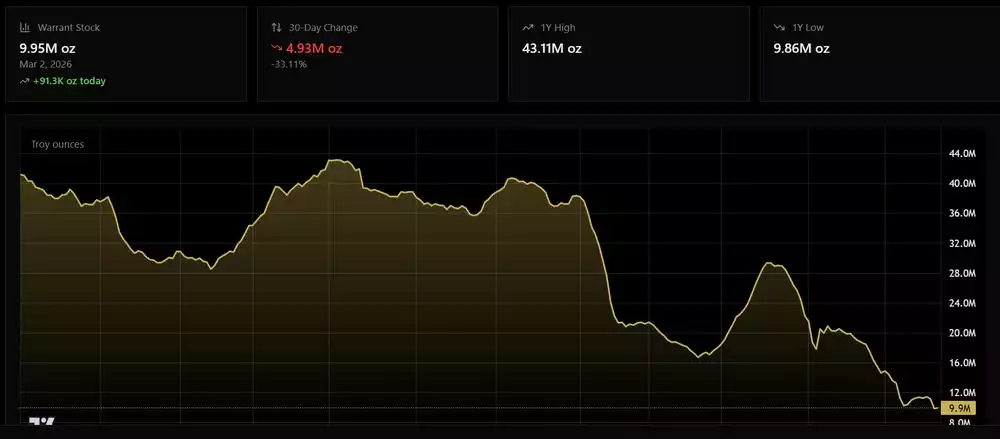
Shanghai silver inventories have fallen to approximately 9.9 million ounces, around 310 tonnes, down from 44 million ounces, or 1,375 tonnes, twelve months ago. In the past 30 days alone, inventories have declined by roughly 30%, around 150 tonnes, despite a week long closure over Chinese New Year.
Shanghai Silver Stock
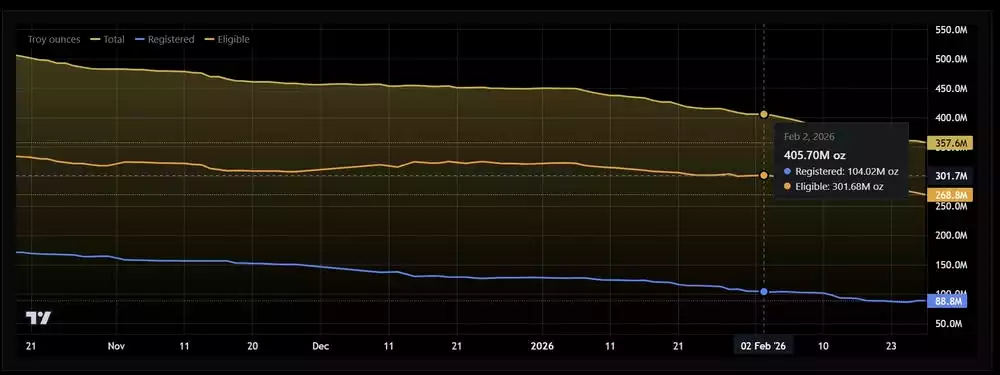
COMEX vault data shows a similar trend. At the beginning of February, registered silver stood at 104 million ounces, with eligible stocks at 301 million ounces. These have since fallen to 89 million registered ounces and 268 million eligible ounces, a decline of roughly 12% in total silver holdings in a single month.
The debate around long term silver price suppression has persisted since the Hunt Brothers era. Whether that narrative ultimately proves correct remains to be seen.
What is clear is that physical inventories are tightening while industrial demand remains firm. If those trends continue, a materially lower gold–silver ratio is not difficult to envisage.
Whether 2026 proves to be the inflection point, as Widmer suggests, will depend less on rhetoric and more on physical availability.