RBA puts rates at 4.85%: the impact on gold of an 18-year high
News
|
Posted 04/11/2026
|
1497
Key Takeaways
- The RBA has put in five rate increases this year.
- With inflation nipping at the heels of the cash rate, real rates are still thin.
- Inflation is not expected to come back to target until late 2027, according to the RBA.
- Rate expectations have mounted here and abroad, and gold has been lower for it.
On 3 November 2026 the Reserve Bank of Australia made good on a 25 basis point hike to 4.85%, the fifth of the year and the most since late 2008 (RBA; ABC News). The cash rate was 3.60% when 2026 began (SavingsMate).
It was not a unanimous call. Three on the Monetary Policy Board would have left things at 4.60%, making the vote six to three.
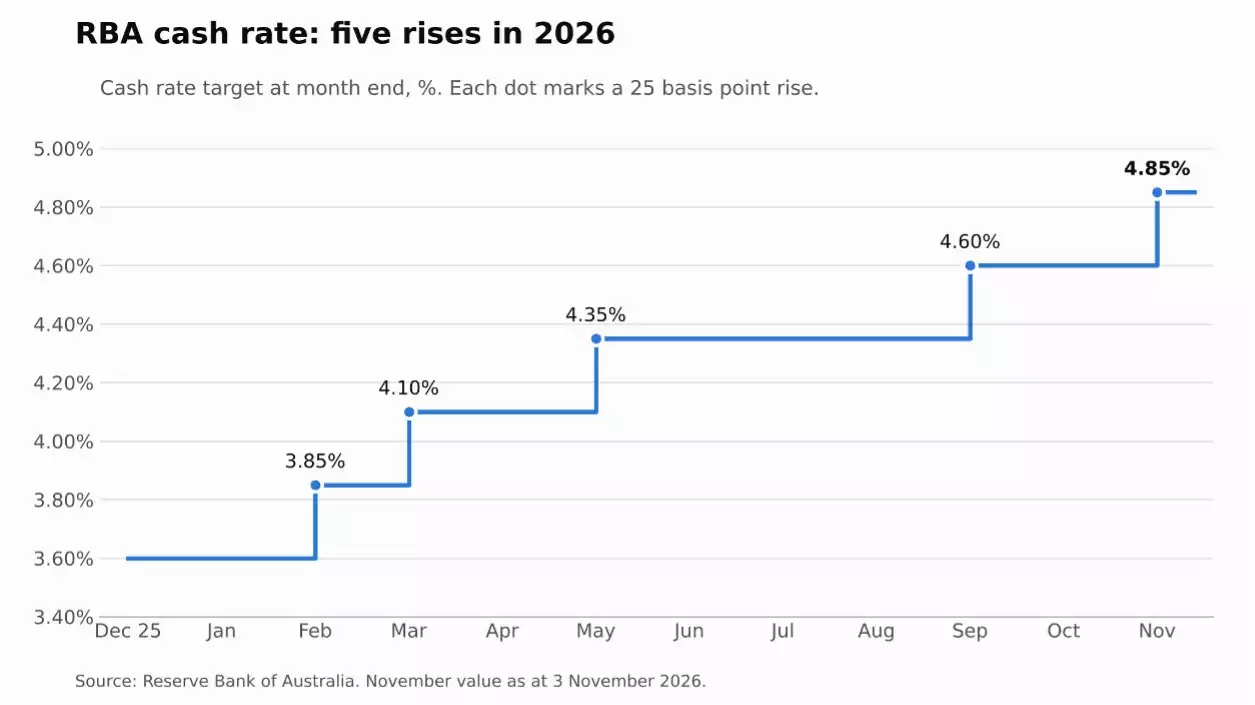
Reasons for the RBA’s move
The RBA hiked because its inflation outlook has moved up substantially. In its statement the Board described inflation as “broadly based” and said that higher fuel and commodity prices stemming from the Middle East conflict are putting pressure on the numbers. There is also “a growing risk that higher inflation expectations become embedded” (RBA).
The ABS has the figures to support it for the 12 months to September 2026 (ABS):
- Headline CPI is 4.3%, having been 4.0% in August
- Trimmed mean inflation stands at 3.6%, well out of the 2-3% band
- Housing was the biggest factor with a 5.2% rise
- Automotive fuel jumped 9.4% in September after a 14.8% increase in August
Consequently the RBA does not see inflation back at the top of its range until late 2027, some three quarters later than was put forward in August.
How tight is 4.85%?
Not as much as one might think. Headline inflation of 4.3% leaves the real cash rate at about 0.55%. On trimmed mean inflation of 3.6% it is 1.25%.
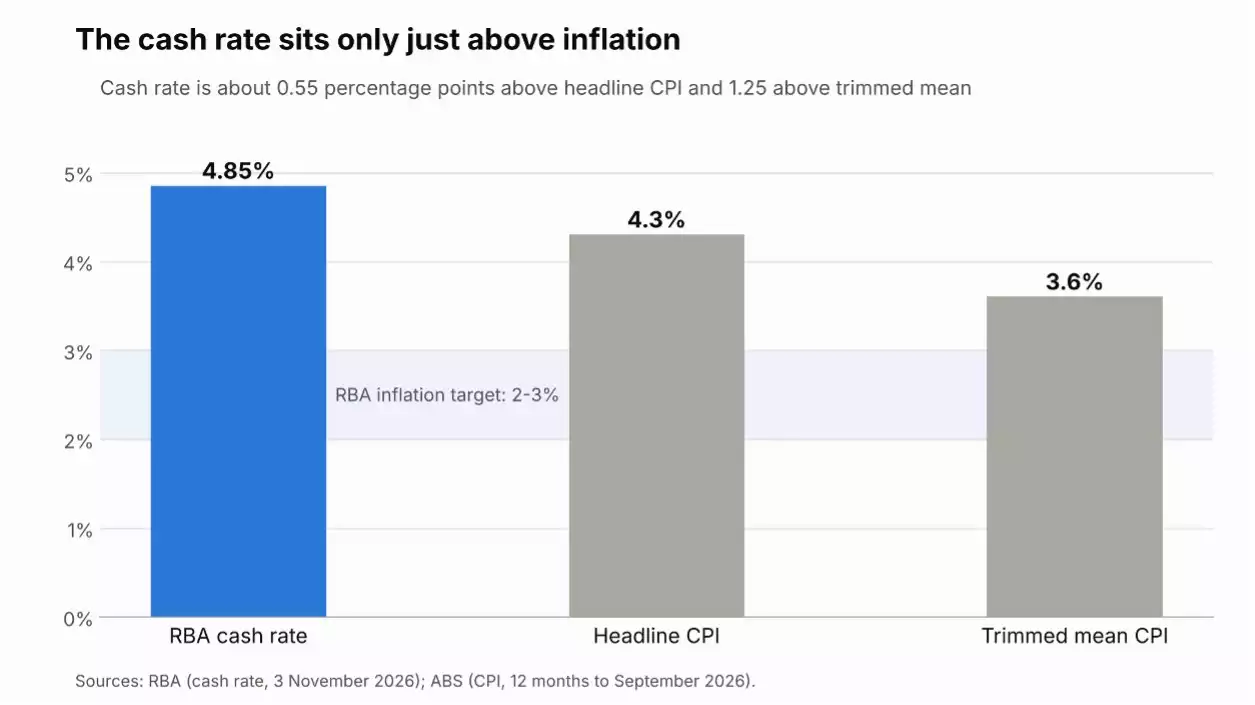
That is a meaningful difference. Savers are only getting paid a little more than their purchasing power is being whittled away. After five rises, cash is still only marginally ahead of the cost of living.
Governor Michele Bullock called it a balancing act. “We do need to get inflation down, and we do have excess demand at the moment,” she told ABC News. “But we are not looking to tip the economy into recession if we can avoid it.”
The RBA is aware of the cost. The economy is slowing, house prices have taken a hit and unemployment is up to 4.7%. It is projected to be 5.1% by the end of 2028.
The state of gold
Gold has been under strain with rate expectations going up both sides of the world. Spot gold was trading at A$5,670 an ounce on 3 November 2026, some 12.5% off for the year and down from a 2026 peak of A$7,737 on 29 January (MetalsRadar).
Much of the pressure has come from the US side of the ledger. Gold in US dollar terms dropped below US$3,900 in late October, the lowest of the year, as better economic data and oil prices propped up bond yields and markets priced in a Fed hike in December (Yahoo Finance).
The Australian dollar was unmoved by the RBA, at 69.84 US cents an hour on (ShareTrader).
Will a rate-hiking cycle alter the case for gold?
Rising rate expectations have been the main drag on gold so far this year. JPMorgan Private Bank’s Yuxuan Tang is blunt: “Gold will find a solid bottom when rates peak” (Yahoo Finance). Some analysts think that is coming once the market is convinced rates have topped out.
Whether we are there is another matter. BetaShares’ David Bassanese says it is “still hard to be definitive” if 4.85% is sufficient and he would not put two more hikes past the RBA in the first half of 2027. Cherelle Murphy of EY reckons the RBA will wait and watch over summer (ABC News). Then again, the fact of a three-way dissent may mean the Board sees the cycle as closer to done.
Longer-term price forecasts have not given way. Reuters polled 30 analysts for a median of US$4,495 in 2026 and US$4,650 in 2027. Suki Cooper of Standard Chartered thinks the eye could return to currency debasement in time (Yahoo Finance).
For investors
The RBA is raising rates in a slowing economy as inflation has been more recalcitrant than forecast and its own timetable has slipped by nearly a year. The resulting real cash rate of half a percent or so is no indication the work is finished.
To an Ainslie Bullion customer the present retreat in gold looks to be a global rate story rather than any change in the long-term forces that put it where it was in January. One such force is the persistent inflation the RBA itself now has in its sights through to late 2027.
This article is provided as general information and should not be read as financial advice. Past performance does not guarantee future results. Do your own research or speak with a licensed adviser before investing.