Oil’s Warning Signal: Is a Global Liquidity Surge Next?
News
|
Posted 08/04/2026
|
4432
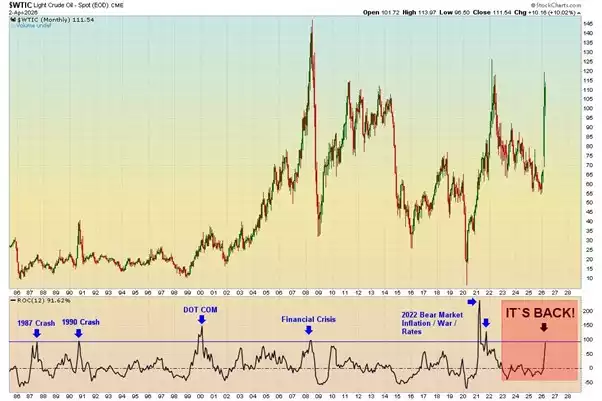
Oil markets are sending a clear warning for the global economy. The chart below highlights a consistent relationship between the 12 month rate of change in oil prices moving above 100 and the onset of global financial crises
At the same time, cracks in the global economy continue to widen. Dollar denominated debt is rising, bond market volatility is increasing, and emerging markets are facing mounting pressure from unaffordable energy imports. Many of these economies remain heavily reliant on external funding, with dollar debt often held by European banks, leaving them particularly exposed.
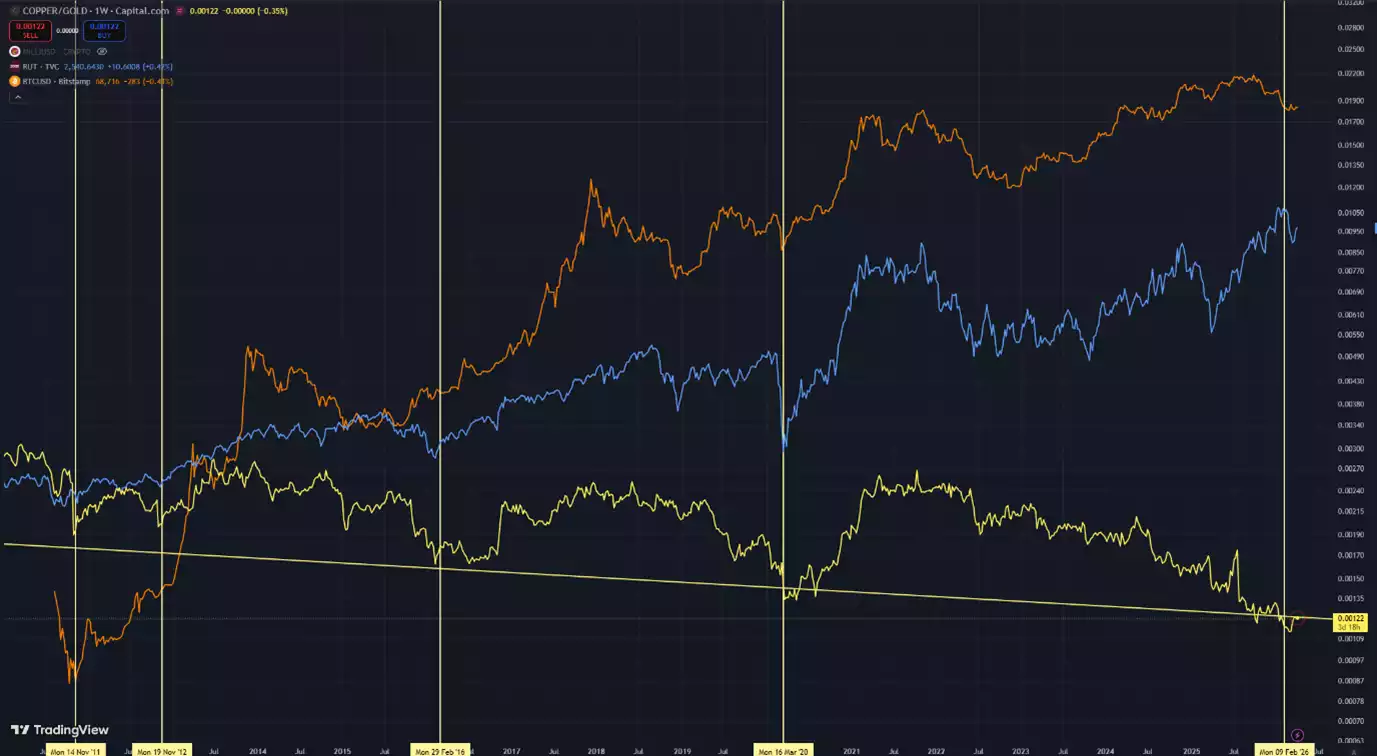
Alongside these stresses, there are early signals that liquidity conditions may begin to shift. The copper to gold ratio is one such indicator, which typically bottoms ahead of rallies in liquidity sensitive assets. The chart below shows this ratio, in yellow, turning before major moves in markets such as Bitcoin and the Russell 2000.
While current instability is likely to drive short term volatility, it may also provide the conditions for coordinated central bank action. In periods of financial stress, policymakers have historically moved to stabilise the system through liquidity injections.
These injections tend to support both hard assets and risk assets in the near term, but the longer term effects are more complex. Increased liquidity often feeds through to higher consumer price inflation over a 12 to 18 month period, which then forces central banks to tighten policy, setting the stage for renewed instability.
This cycle has repeated over time, contributing to structurally higher inflation and progressively larger imbalances. Each iteration tends to expose deeper vulnerabilities, culminating in periodic systemic events. Current cyclical signals suggest risks that could extend beyond a typical downturn, with historical comparisons pointing as far back as the Great Depression.
The present environment points to both a developing crisis and a likely policy response on the horizon.
While volatility will affect equities, financial institutions and investors alike, holders of physical bullion remain better positioned. In periods of monetary expansion and currency debasement, hard assets have historically provided both resilience and long term upside.