Macro and Global Liquidity Analysis: Gold, Silver, and Bitcoin February 2026
News
|
Posted 27/02/2026
|
12622
Today the Ainslie Research team brings you the latest monthly update on where we are in the Global Macro Cycle, driven by the Global Liquidity Cycle, and the implications for Gold, Silver, and Bitcoin. This summary highlights the key themes discussed with our expert panel. We encourage you to watch the recorded video of the full presentation for the detailed explanations and the rich discussion between the panel members.
xxxxxxxxx
It has been a few months since our last update, and to say a lot has happened would be an understatement. We have been through massive moves in Bitcoin, extraordinary surges in gold and silver, and perhaps most importantly, we have had to step back and fundamentally reassess some of the mechanics behind it all. This month's discussion takes a slightly different format. Rather than a rigid walkthrough of charts, the panel engaged in a more open conversation, going down the rabbit holes that this environment demands. If you enjoy that format, let us know in the comments.
Something Has Changed in the Framework
Our analytical framework operates across three tiers: global liquidity, the macro business cycle (growth and inflation), and technical analysis. In this cycle, the first and third tiers have performed exceptionally well. The global liquidity index called the top in October, and Jamie Coutts' technical model was signalling a Bitcoin top in September. But the middle tier, the macro business cycle, did not behave as expected. Understanding why is critical.
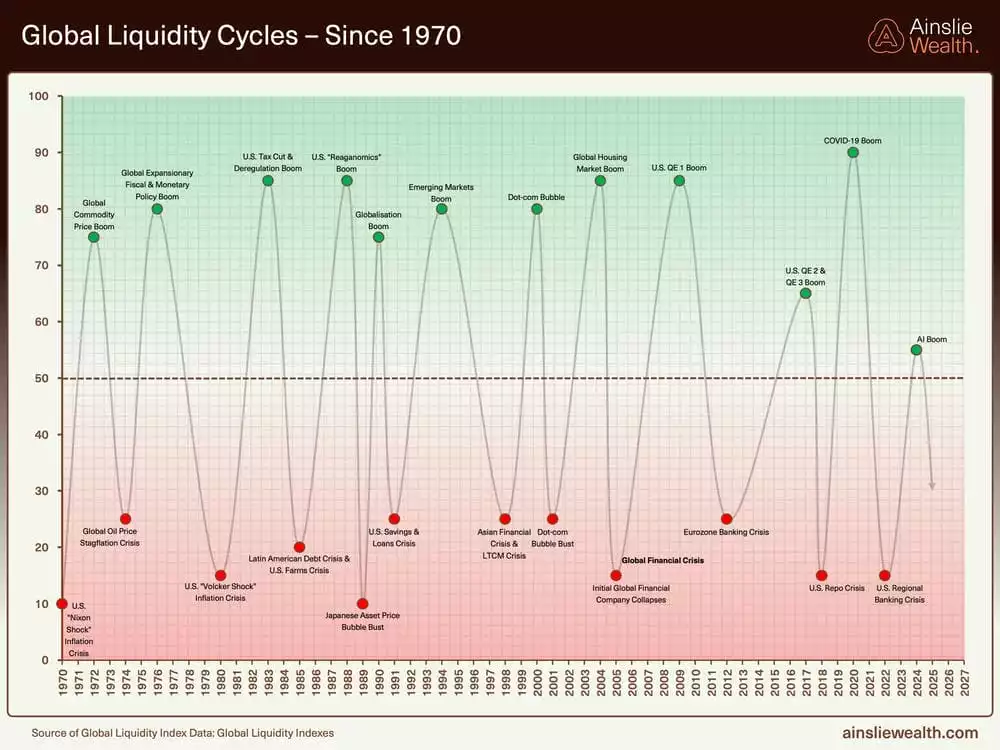
Four structural shifts have converged to disrupt the traditional business cycle as we know it:
- A Trump administration determined to boost Main Street over Wall Street, fundamentally changing the direction of liquidity flows.
- A bifurcation between China and the rest of the world. China continued pumping liquidity, but that money flowed primarily into gold, not into Western financial markets. Stripping China out, global liquidity clearly topped in October.
- A structural shift towards trust-minimised assets. Gold is now the number one reserve asset in the world by value, surpassing U.S. Treasuries for the first time ever. Central banks have been front-running this move for years.
- Artificial intelligence. Economics is fundamentally about scarcity. AI is about abundance. The sheer scale of capital expenditure flowing into the AI build-out has absorbed liquidity that would ordinarily flow into markets and the broader economy. This is not a minor disruption. It is rewriting the rules.
The question we debated openly is whether the business cycle is dead or merely on pause. The honest answer is we do not know yet, but the panel's consensus is that you cannot rely on
historic cycles in the next phase with what is coming. The traditional relationship between growth, inflation, and asset performance has, at minimum, been temporarily broken.
Global Liquidity: Follow the Money
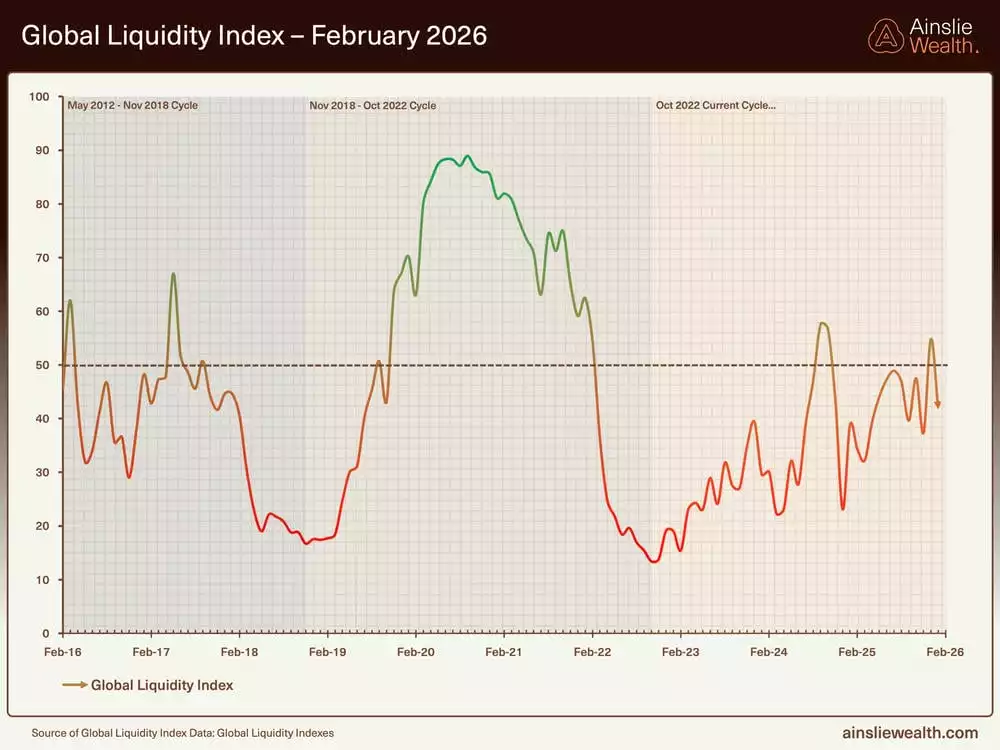
The Global Liquidity Index remains the most reliable signal in our framework. What matters is not the nominal level of liquidity, which continues to rise, but the rate of change and, critically, the components driving that rate of change. Markets are a discounting mechanism. Once the market as a collective believes liquidity momentum is slowing, capital begins to exit the most sensitive assets first.
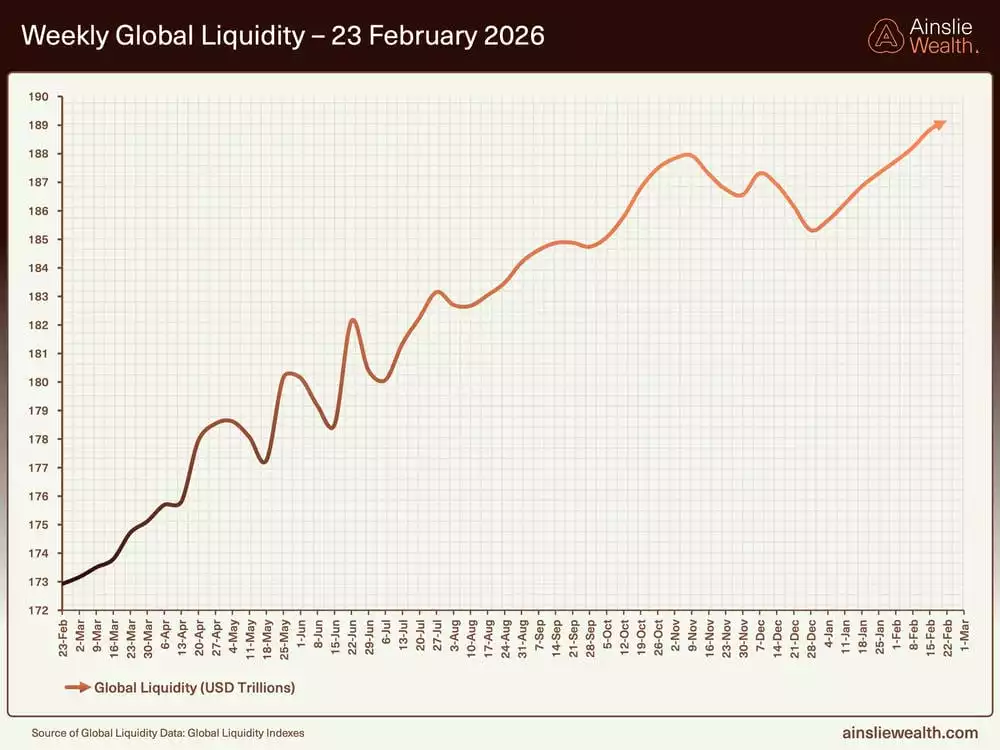
A key nuance this cycle has been the importance of separating China from the rest of the world. We have been saying this for over 12 months. China's liquidity injection has been enormous, with an estimated three trillion injected in 2025 and potentially another three trillion this year, but that money has largely flowed into gold and their domestic real economy, not into Western financial markets. When you strip China out and look at advanced economies alone, the liquidity peak in October was clear.
Growth and Inflation: The Broken Signals
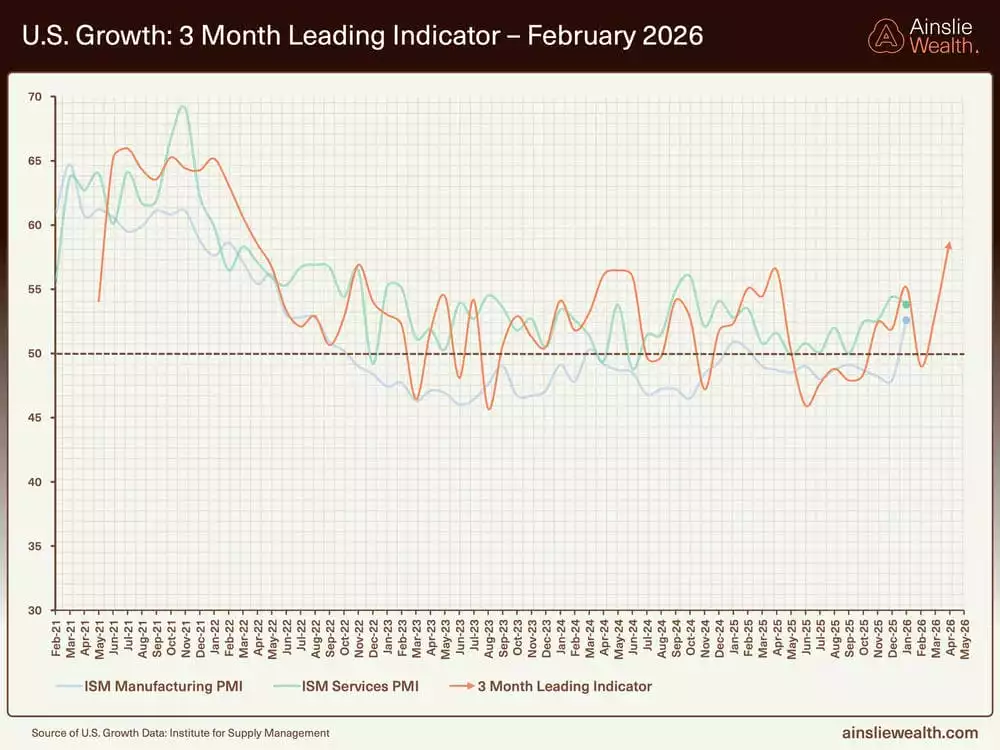
The growth chart looks like everything is off to the races. But traditionally, strong growth meant strong employment. What we are seeing now is the opposite. AI is driving enormous productivity gains without necessarily creating human jobs. The growth is real, the productivity it unlocks is phenomenal, but it is a fundamentally different kind of growth to what the traditional metrics were designed to measure.
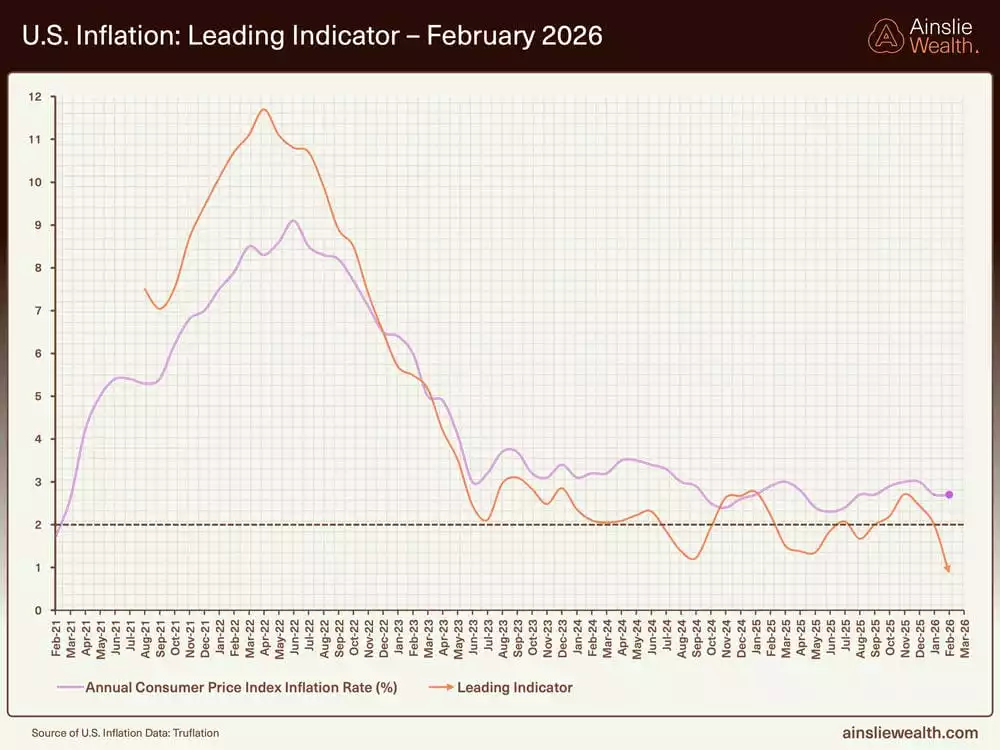
Inflation tells a similar story of disruption. The IBM example from earlier in the week is instructive: when Claude demonstrated it could refactor COBOL, IBM's share price fell off a cliff. A protected knowledge moat, obliterated overnight. This is the kind of deflationary force that traditional inflation metrics struggle to capture. Everyone's basket is different, and certain sectors of the economy will face relentless deflationary pressure from AI while others, particularly physical commodities required for the AI build-out, may see persistent inflation. The unified picture is gone.
If inflation struggles to get above two or three percent and the mechanics of how money flows into the economy have fundamentally changed, then by the traditional definition, we may never move into that late cycle phase. That does not mean nothing happens. It means the old map no longer matches the new territory.
Bonds and Volatility: Peak Calm Before the Storm?
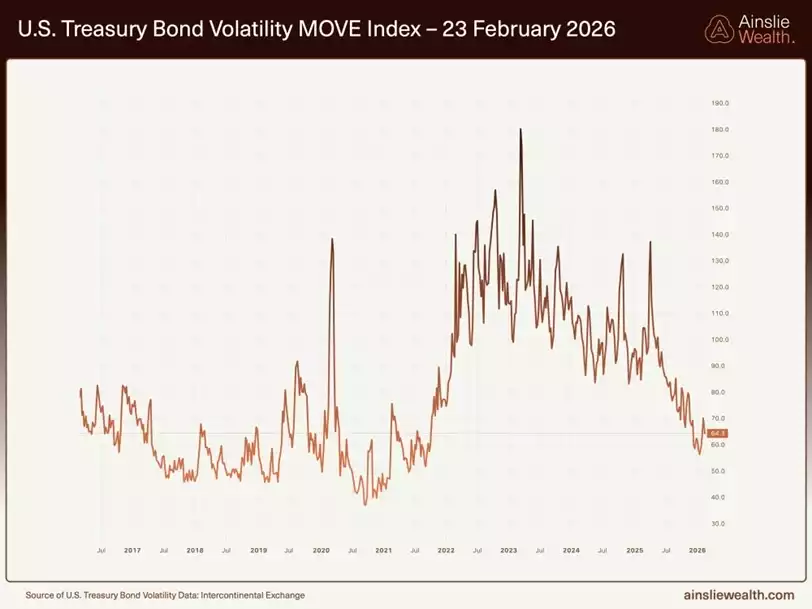
The MOVE Index, which measures Treasury bond volatility, has fallen to levels that look almost impossibly calm given the magnitude of geopolitical and economic disruption we have experienced. This is largely a function of deliberate management: the U.S. government issuing heavily at the short end of the curve where demand is strong, while simultaneously buying longer-duration bonds to suppress volatility and improve collateral values throughout the financial system.
It is a very orchestrated picture, and it works until something breaks. With volatility already near historic lows, the panel's view is that reversion to the mean at some point is not just possible but likely, and when it comes, the impact on collateral values and risk appetite could be significant. The $40 billion per month in quantitative easing from the Fed sounds large, but relative to a system carrying trillions in debt, it is modest. The panel's consensus: this is peak good. And historically, peak good does not last.
Bitcoin: Already Priced the Pain?
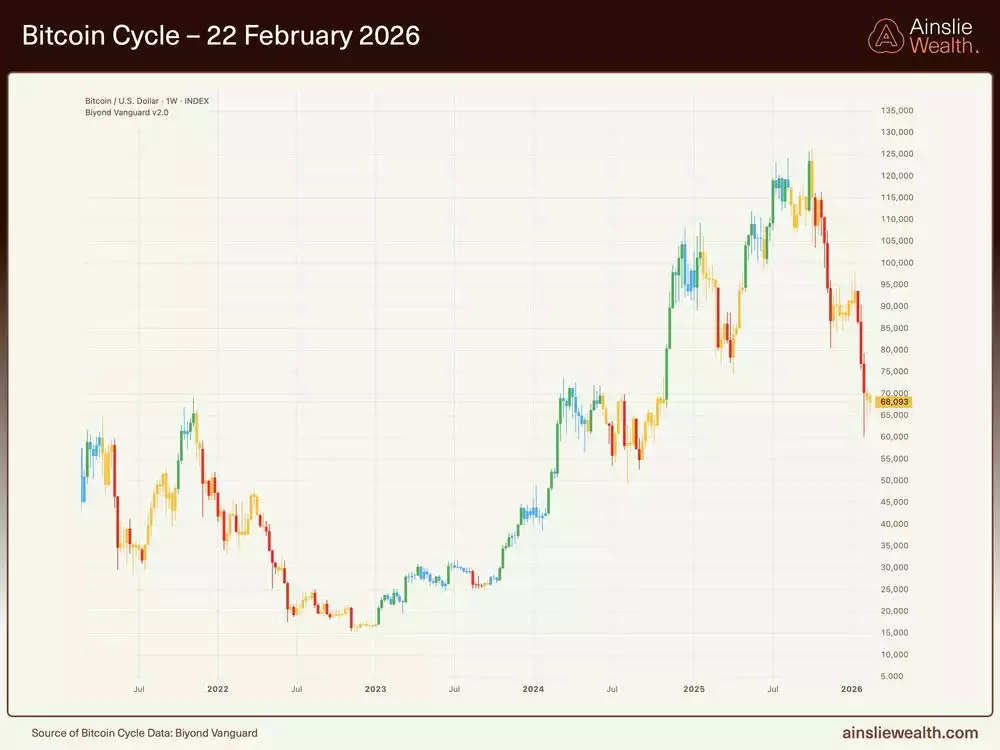
Bitcoin has been the canary in the liquidity coal mine. It peaked in October, well before broader markets began showing stress, because nothing is more sensitive to global liquidity than Bitcoin. It sniffs out changes before anything else.
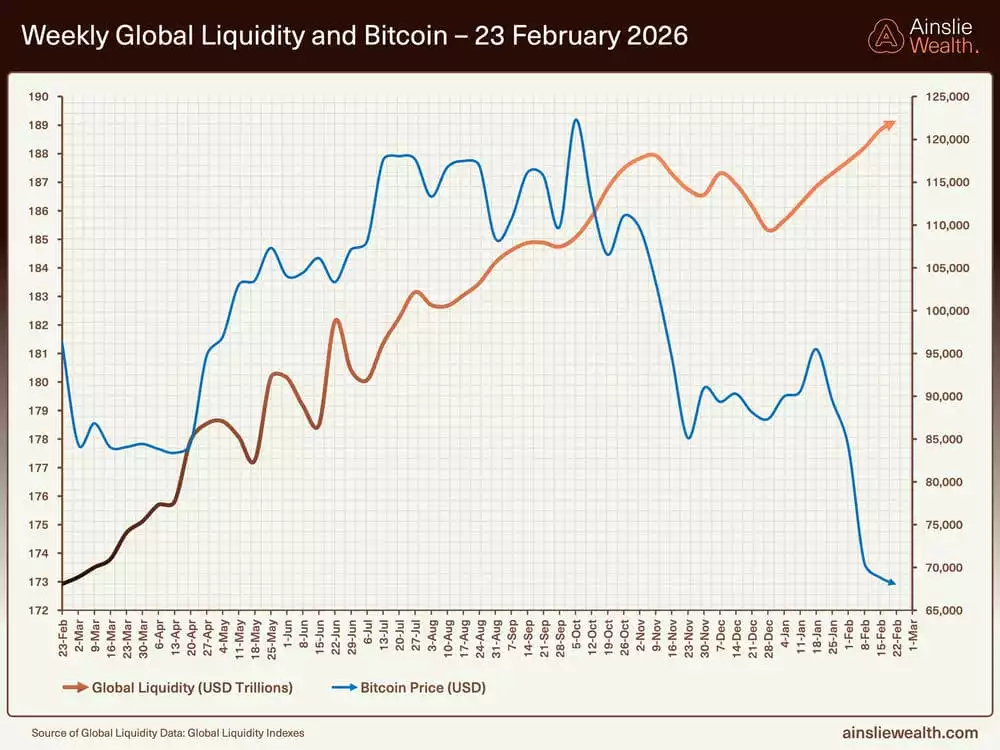
With Bitcoin already down roughly 50% from its highs, the panel explored a provocative question: is it possible that Bitcoin has already done the move to the downside and begins to stabilise, even as the Nasdaq and traditional markets play catch-up in the risk-off trade? The psychology is fascinating. In October, people would have given anything to buy Bitcoin at $65,000. Now that it is there, nobody wants to touch it. That is markets.
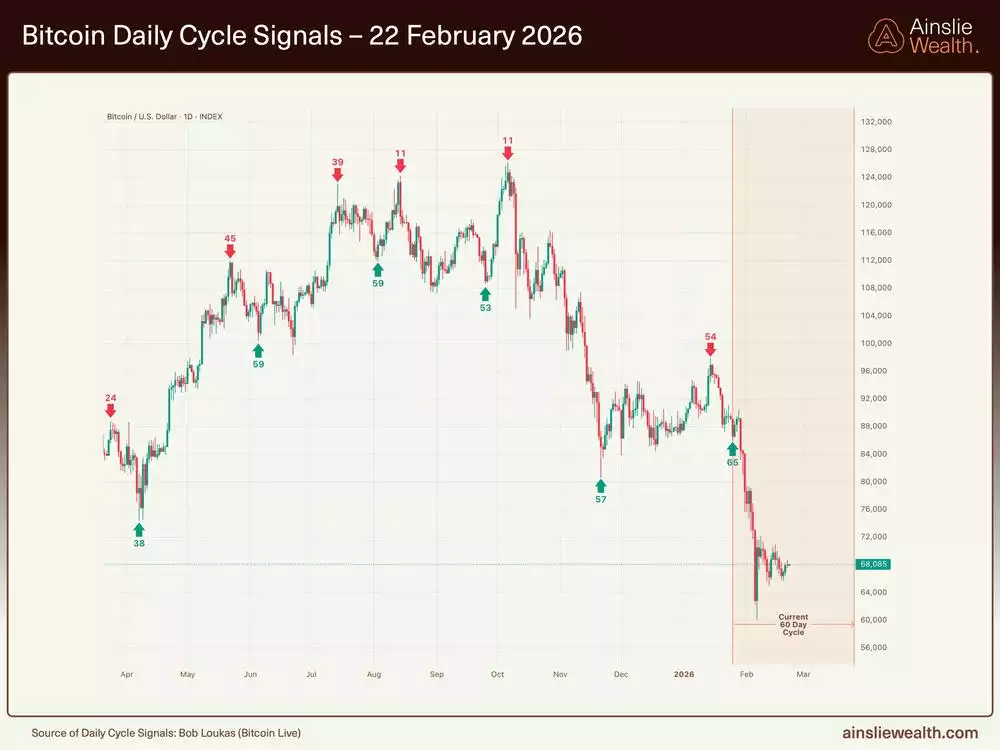
The panel's view is nuanced. If the drawdown in traditional markets is orderly, there is a legitimate case for Bitcoin to find a bid as a trust-minimised, stateless asset. If it is disorderly, with margin calls and liquidity events, everything gets pulled down initially, including gold. But the response to that scenario, likely aggressive central bank intervention, is where the real opportunity lies. The asymmetric risk-reward at current levels is hard to ignore for anyone with a long-term horizon.
Gold and Silver: A Perfect Storm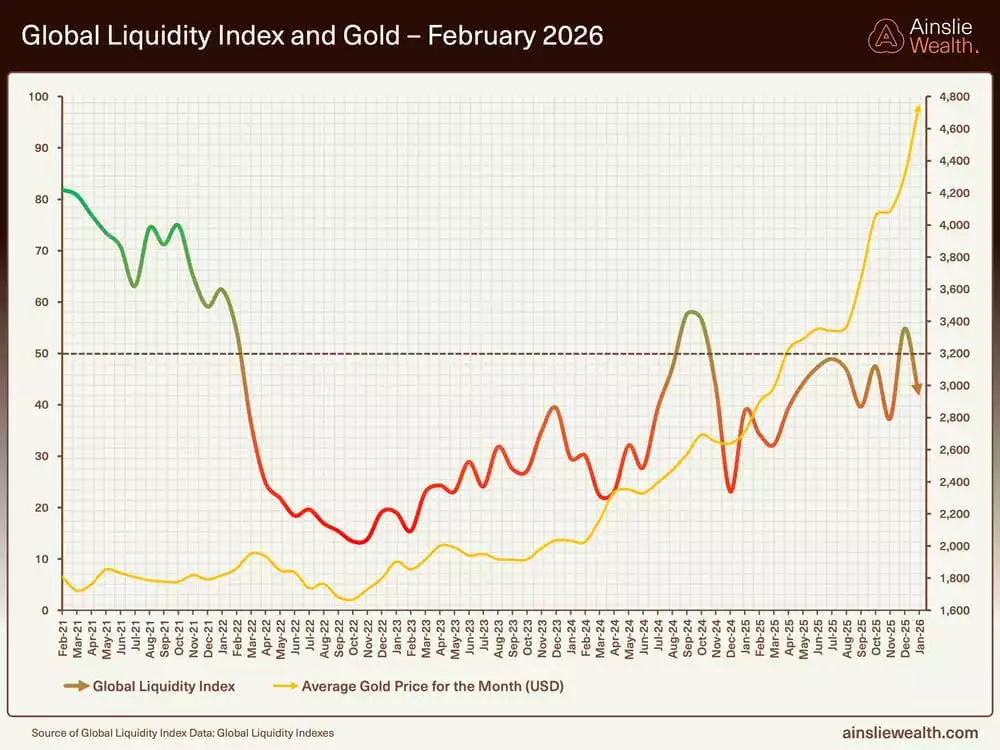
Gold continues to demonstrate its unique dual nature: beautifully correlated when liquidity is strong, and beautifully correlated when things get shaky. Central bank accumulation has been relentless, retail demand at the Ainslie stores has reflected a growing realisation that scarcity in this new world has genuine value, and for the first time in history, two consecutive years have passed with no new substantial gold deposits found. The supply side of this story is tightening at exactly the moment demand is accelerating.
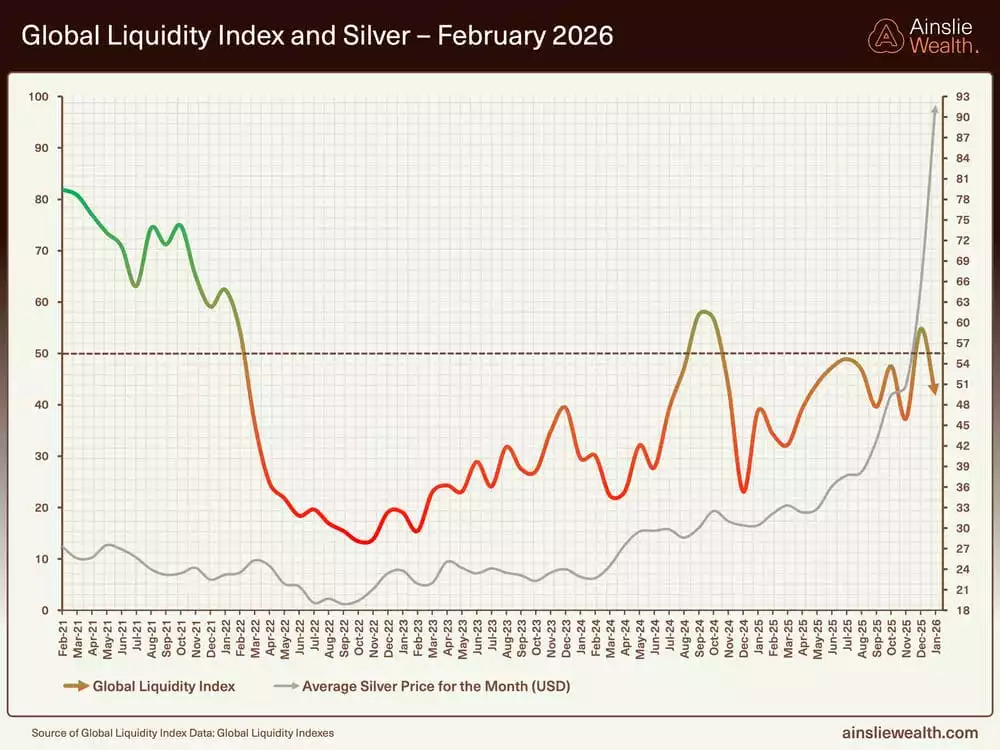
Silver has been extraordinary. Five consecutive years of structural supply deficits. Industrial demand from solar panels, AI hardware, electronics, and even the defence sector. Samsung's announcement of silver solid-state batteries. Unlike previous squeezes, this time the wholesale premiums have been genuinely painful, reflecting a real physical shortage rather than speculative froth. And critically, silver is not pricing itself out of its industrial applications. Even at current prices, the silver component remains a relatively minor cost in most manufacturing contexts, which means demand destruction is unlikely until prices are multiples higher.
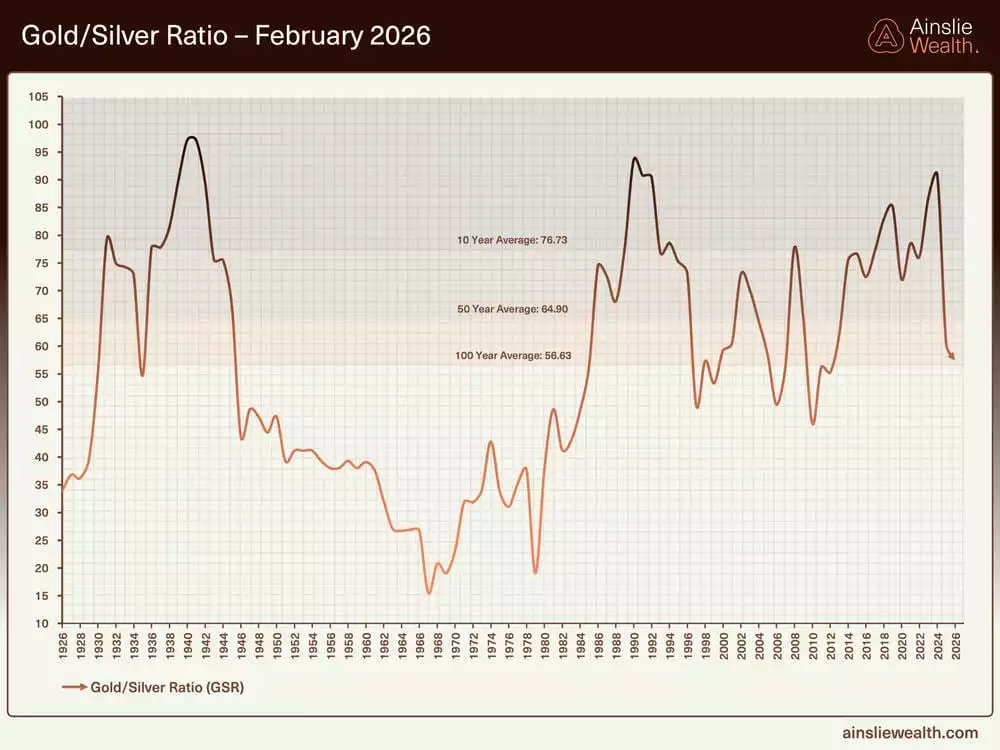
The gold-to-silver ratio has compressed sharply towards its 100-year average, and there is a credible argument that it could spend decades in the 30s given the structural tailwinds silver now enjoys. The pullback from the vertical surge has been remarkably shallow, which suggests the underlying bid is real and sustained.
The U.S. Dollar
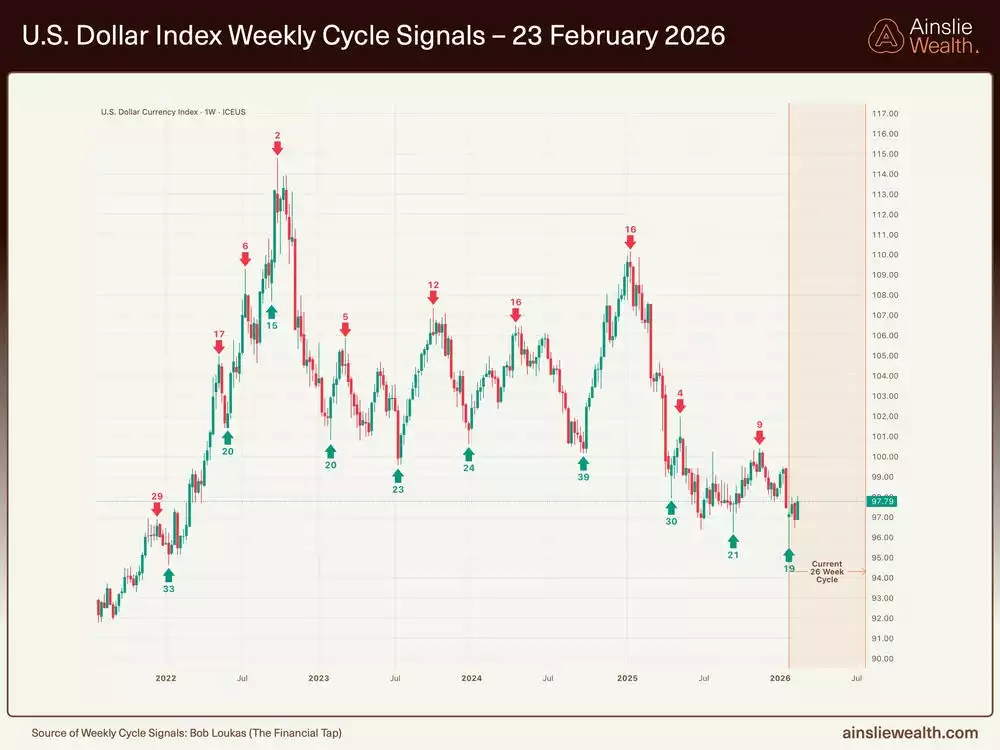
The dollar's trajectory adds another dimension to the picture. The DXY has trended lower, currently sitting around 97, which historically provides a tailwind for hard assets priced in dollars. In a world increasingly questioning the long-term role of the dollar as the sole reserve currency, this trend aligns with the broader shift towards trust-minimised assets.
Key Takeaways
- Global liquidity headwinds remain. The panel does not see where the next wave of momentum will come from to drive liquidity meaningfully higher. Risk assets, particularly those that have not yet corrected, face headwinds potentially lasting through the middle of the year or beyond.
- The investing environment ahead may be one of the hardest we have ever seen. A world of infinite abundance in some areas and immutable scarcity in others creates a fundamentally different landscape. The assets we focus on, gold, silver, and Bitcoin, are perfectly positioned as trust-minimised, provably scarce assets in that world.
- AI modelling suggests the most likely outcome is the messy middle. Not the utopian outcome, not the dystopian one, but a world where it is pretty good for people holding the right assets and not so great for those who do not. Getting on the right side of that divide has never been more important.
- Bitcoin is in accumulation territory. Down 50% from the highs with extreme bearish sentiment, the asymmetric risk-reward is compelling for anyone with a long-term view, while acknowledging that further volatility is possible if traditional markets correct sharply.
- Gold and silver remain structurally supported. Supply constraints, central bank demand, industrial applications, and the shift towards trust-minimised assets all provide a sustained bid that shallow pullbacks have only reinforced.
Watch the full presentation with detailed explanations and discussion on our YouTube Channel here:
xxxxxxx
We are back to our regular monthly cadence and will return in March to assess what has changed. As always, feel free to reach out with any questions or feedback that we can incorporate into next month's video.
Chris Tipper
Chief Economist and Strategist
The Ainslie Group
x.com/TipperAnalytics
Disclaimer: Everything said and shown in this presentation is intended for general informational purposes, does not take into account your particular circumstances, objectives, or situation, is not financial advice, and you should always do your own research and consider obtaining independent advice before making any investment decisions.