Liquidity Signals a Macro Turning Point
News
|
Posted 15/04/2026
|
1512
While sentiment across most markets remains fearful, and the mainstream news cycle is amplifying panic, the charts suggest a calmer and more measured picture.
Below, the copper to gold ratio, a key indicator of the business cycle, has reached a major trendline that has historically acted as a reversal point over the past decade. Rising copper prices relative to gold typically signal an expanding economy, improving liquidity, and stronger risk appetite. However, turning points in this ratio are often accompanied by crisis events or pullbacks in financial markets. Bitcoin and the Russell 2000 are useful examples of assets that react quickly to changes in liquidity.
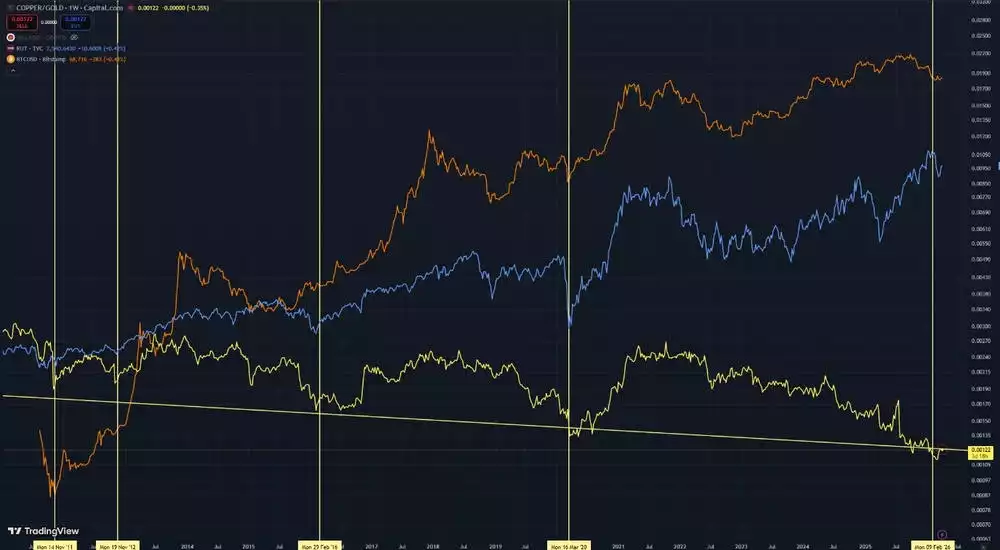
This ratio can take time to reverse, but current levels suggest a macro turning point may be forming.
Meanwhile, the US Dollar Index has shown little movement despite six weeks of war and has been unable to break higher even amid extreme geopolitical uncertainty. The recent slowdown in liquidity appears to be driven primarily by oil markets, alongside a brief spike in bond market volatility.
Looking at oil, while the broader macro environment still supports higher prices over time, the chart suggests a potential top may already be in place. Price action has struggled to break above 120, with elevated volatility and repeated failures to move higher following a strong rally. This type of behaviour is often consistent with distribution.
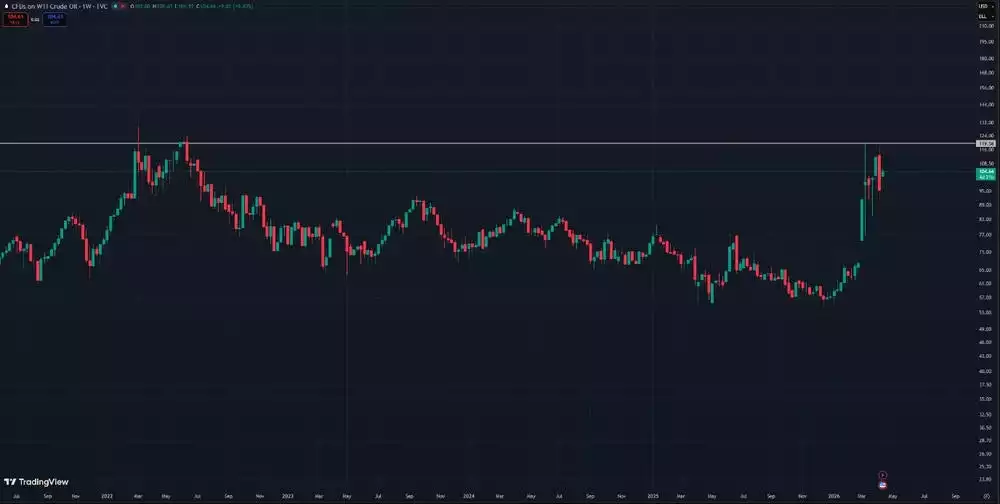
A reversal in oil would provide relief across the economy. However, historically, a spike followed by a reversal has also marked periods of financial turbulence, often preceding central bank intervention.
At the same time, the US 10-year yield has reached a major resistance trendline and may begin to reverse in the near term. This would support higher bond collateral values and, in turn, improved global liquidity conditions.
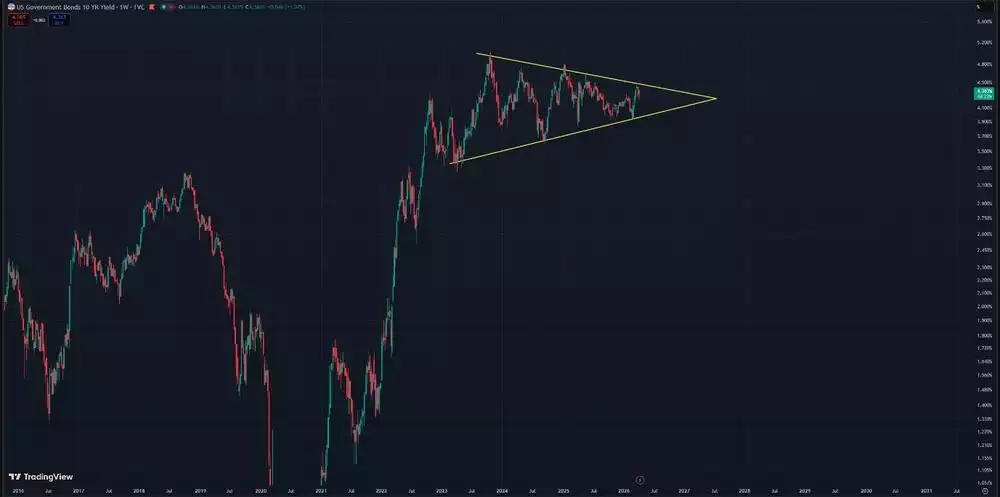
That said, a sustained decline in yields would likely coincide with a flight to safety, as investors move into US bonds and interest rates fall. Both are typical of stressed financial conditions. Risk assets tend to rally after yields have already fallen sharply, not during the decline itself. While falling yields signal stress, they are often followed by a significant increase in liquidity.
The MOVE Index, which measures bond market volatility, has also reversed sharply after a recent spike. Elevated bond volatility increases the risk premium on collateral, reducing the amount of liquidity that can be created. Lower volatility is therefore essential for stable liquidity conditions and healthier markets.
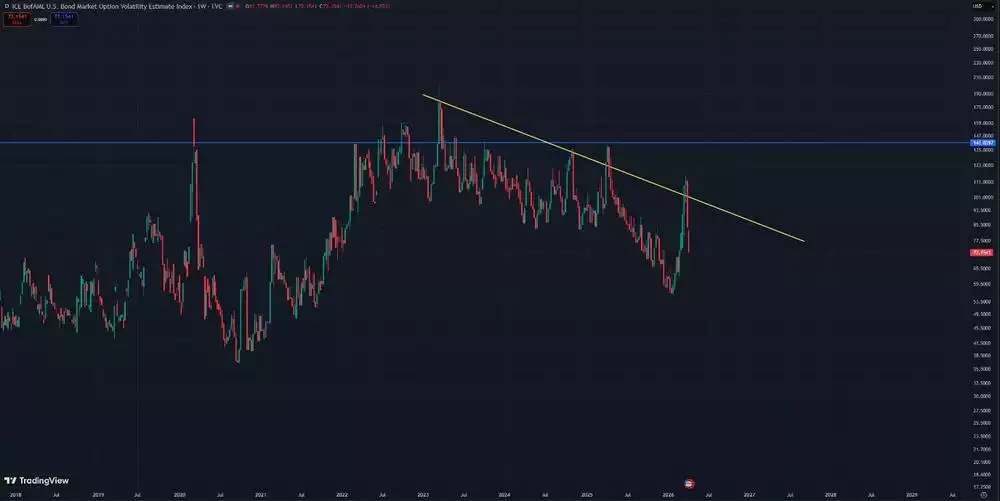
Taken together, these indicators point to the potential for financial turbulence in the near term. However, from a broader macro perspective, they also suggest the conditions for a subsequent increase in liquidity.
As liquidity expands, hard assets with constrained supply such as gold, silver, bitcoin, and commodities tend to benefit, as capital seeks a store of value. Any significant increase in money creation following a crisis would likely contribute to continued US dollar debasement and sustained inflationary pressures over the longer term.