Late-Stage Liquidity Cycle: Positioning for Exuberance, Complacency and Irrational Upside
News
|
Posted 14/05/2026
|
1832
Key Takeaways
- Global liquidity is sitting near cycle highs at approximately USD $191.5 trillion, but the Global Liquidity Index has turned and momentum is fading.
- The distinction between the headline level and rate of change is central to understanding where we are in the macro liquidity cycle.
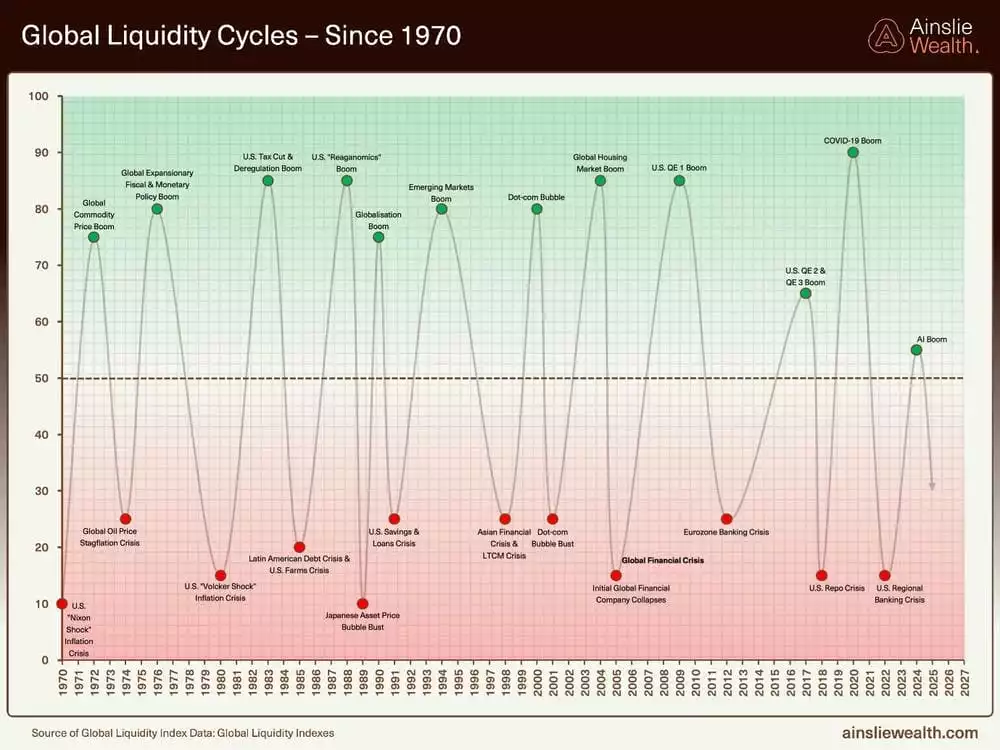
- Late-cycle patterns visible across indices since 1970 suggest speculative rallies and risk asset support typically precede the contraction phase.
- Central banks now hold more gold than US Treasuries for the first time since 1996, buying at more than double their pre-2022 annual pace.
While global liquidity is currently sitting at the highs, momentum has turned.
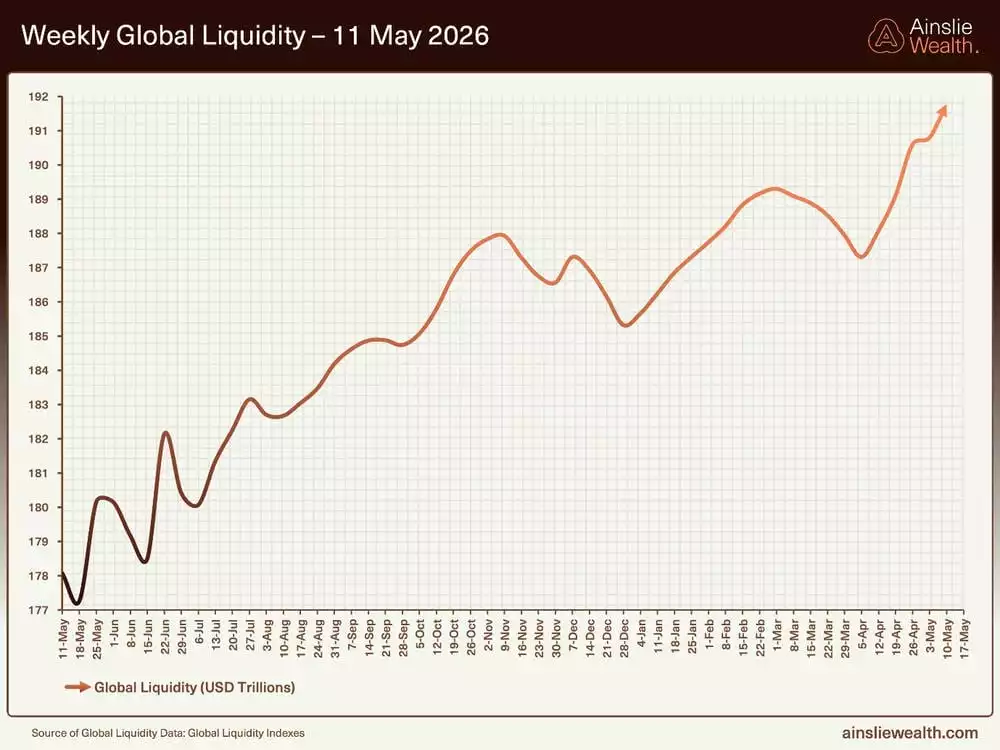
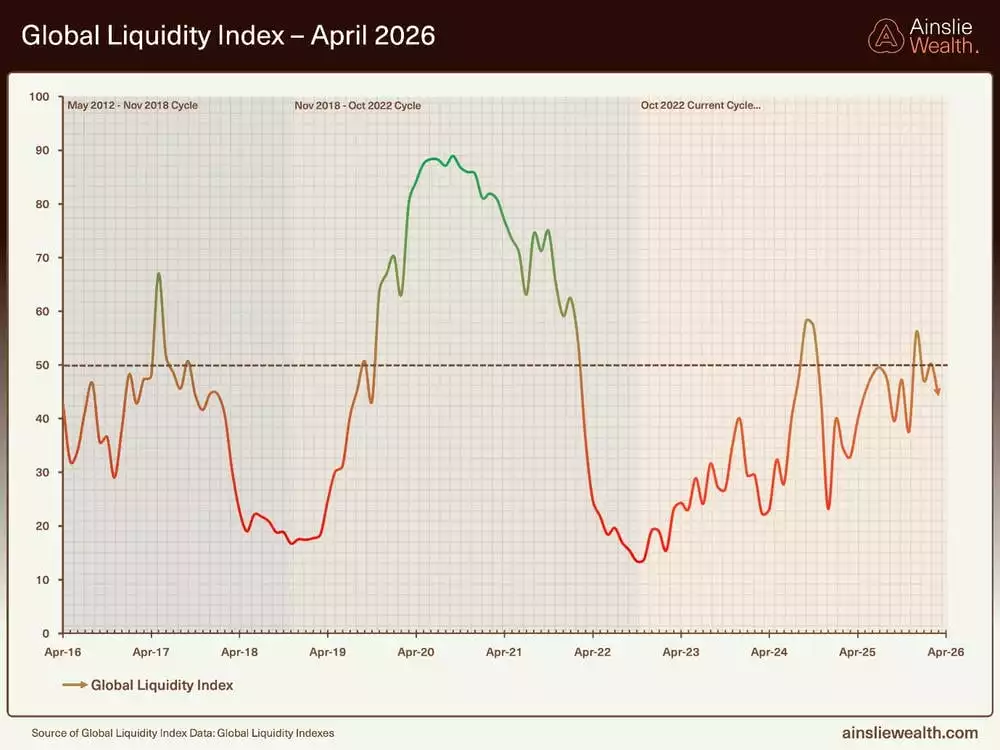
The distinction between the headline number and rate of change is intrinsic to understanding the macro liquidity cycle. Much like inflation, the economic impact of liquidity is best understood via the rate of change rather than the headline print.
This late liquidity cycle phase is typical of speculative rallies and support for risk assets, as underlying conditions soften, prior to a market turn.
Looking at the Russell 2000 small cap index, the P/E ratios in major indices like the Nasdaq, or even the vertical move out of the S&P 500’s recent lows, amid waning liquidity momentum and worsening economic conditions, we can clearly see that most markets are in the speculation phase typical of late liquidity cycle, with turbulence expected ahead.
In addition to speculation, commodity outperformance and defensive rotation being recorded are further signs of late liquidity cycle.
While speculative assets rally, astute investors appear to be positioning in commodities with major accumulation of monetary hedges to protect against systemic financial instability. The current landscape reflects a repricing of trust in centralised assets along with elevated speculation simultaneously, with both the hedges and the speculative assets running in this final stage of the cycle. Long-term views to ride out the current phase into the next liquidity cycle allow investors to select assets that provide shelter from financial instability (decentralised hard assets) which also benefit from the expanding liquidity response to the instability.
Central banks are doing exactly this, stockpiling gold at record levels. According to the World Gold Council, central banks now hold more gold than US government bonds for the first time since 1996, buying over 1,000 tonnes annually since 2022, more than double their 2010–2021 average pace.
Ainslie Bullion has been helping Australians access physical gold and silver since 1974.
This article is general information only and does not constitute financial advice. Past performance is not indicative of future results. Always conduct your own research or consult a licensed financial adviser before making investment decisions.