Gold’s $4,000 Test: A Shakeout, Not a Broken Thesis
News
|
Posted 29/06/2026
|
1559
Key Takeaways
- Gold fell through the psychologically important US$4,000 level before bouncing from daily support near US$3,991, a move that looks more like a liquidity flush than a clean breakdown.
- The pullback has been driven by a stronger US dollar, a more hawkish Federal Reserve, and renewed bets that interest rates could rise rather than fall, leaving gold on track for its fourth straight weekly decline, the longest losing streak since August 2023.
- Forced selling and crowded-trade unwinds are not the same as a failed investment thesis, and some of the sharpest pullbacks in long-term bull markets happen precisely because an asset has already run hard.
- With sticky inflation, rising debt, and central banks still accumulating gold, the long-term case for scarce, non-sovereign monetary assets remains intact.
Gold has had a rough week, but Friday’s rebound made the chart much more interesting. After falling through the psychologically important US$4,000 an ounce level, bullion bounced almost perfectly from daily support near US$3,991. The headlines will focus on gold losing and then reclaiming US$4,000, but the chart suggests the move was less of a clean breakdown and more of a liquidity flush into support.
From October to November last year, you can see the support is roughly US$3,991, not US$4,000. This is psychological significance versus technical analysis 101.
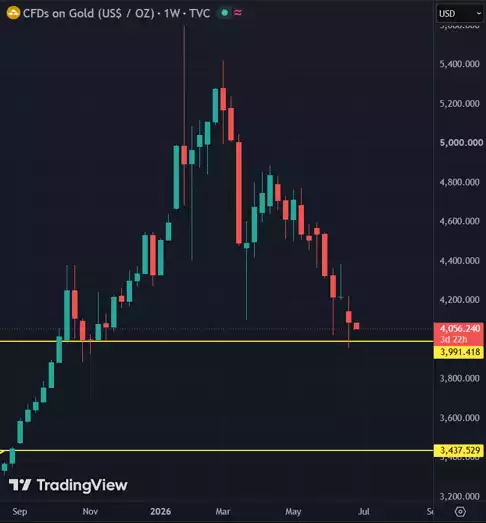
Inflation data came in a bit hot last week but within expectations. Gold remains on track for its fourth straight weekly decline, its longest losing streak since August 2023. The cause of the pullback is not hard to see. The US dollar has strengthened, the Federal Reserve has turned more hawkish, and markets are again pricing in the possibility that interest rates may need to rise rather than fall.
Gold was not only sold because investors suddenly stopped believing in it. It was also sold because it had been one of the best performing assets of the past year. When volatility hits and portfolios need cash, investors often sell what they can, not only what they want to sell.
A forced liquidation or crowded trade unwind is not the same thing as a failed investment thesis. In fact, some of the sharpest pullbacks in long term bull markets happen precisely because the asset has already performed so well. Winners get sold to cover losers. This week’s pressure also came as technology stocks fell sharply on renewed doubts around the artificial intelligence trade. That matters because gold, Bitcoin and high growth equities have all been part of the broader post pandemic, liquidity sensitive investment environment. When risk appetite shifts suddenly, correlations can rise and even defensive assets can be caught in the selling.
The technical picture now becomes important. If gold can hold the US$3,991 area and show some gains, the recent selloff may look more like a correction inside a larger bull market than the start of a deeper breakdown. The fact that central banks are still depending on gold and making continued purchases helps lean on the side of strength.
The key question is whether the long-term drivers behind gold have actually disappeared. The latest US personal consumption expenditures price index rose 0.4% in May. Those numbers are not consistent with a clean return to the Federal Reserve’s 2% target. Consumer sentiment improved in June as lower gasoline prices offered some relief, but households remain under pressure from the high cost of living. In other words, the inflation scare has not vanished. It has simply become more complicated.
The gold market is being tested by a stronger dollar and a more aggressive Federal Reserve. But the bigger picture remains unchanged. If inflation stays sticky, debt keeps rising and central banks are forced to choose between price stability and financial stability, the case for holding scarce, non-sovereign monetary assets remains very much alive.
This article is general information only and does not constitute financial advice. Past performance is not indicative of future results. Always conduct your own research or consult a licensed financial adviser before making investment decisions.