Australia: The Bananaless Republic
News
|
Posted 30/04/2026
|
1827
Key Takeaways:
- Australia’s inflation just came in at 4.6%, continuing a GDP per capita recession that is making Australians feel poorer while cost of living and housing crush household budgets
- Fertiliser shortages are the next crisis: Australia closed its last domestic fertiliser manufacturer in December 2022 and now imports approximately 90% of its requirements
- Around one third of globally traded fertiliser transits the Strait of Hormuz, now in its third month of closure
- Fertilised crops produce up to 40% more output: less fertiliser this season means lower yields and higher food prices
- In the US, an American Farm Bureau Federation survey found 70% of farmers cannot afford their full fertiliser requirements for 2026
Australia will shortly be remembered as the bananaless republic, as fertiliser shortages look set to lead to lower crops and higher inflation in the coming months. Australia’s inflation just came in at 4.6%, ensuring another year where Australians will continue to suffer a GDP per capita recession, making us all feel poorer while the cost of living and housing crushes us. With immigration now running at approximately 479,000 net long-term arrivals in the year to February 2026 (ABS), and 53,567 new dwellings commenced in the December quarter alone, construction is still not keeping pace with demand. On top of this are the constant critical manufacturing closures, from plastic to glass, and today we can add the next crisis to the snowball: fertiliser, something we gave up in 2022. Why you ask? Gas.
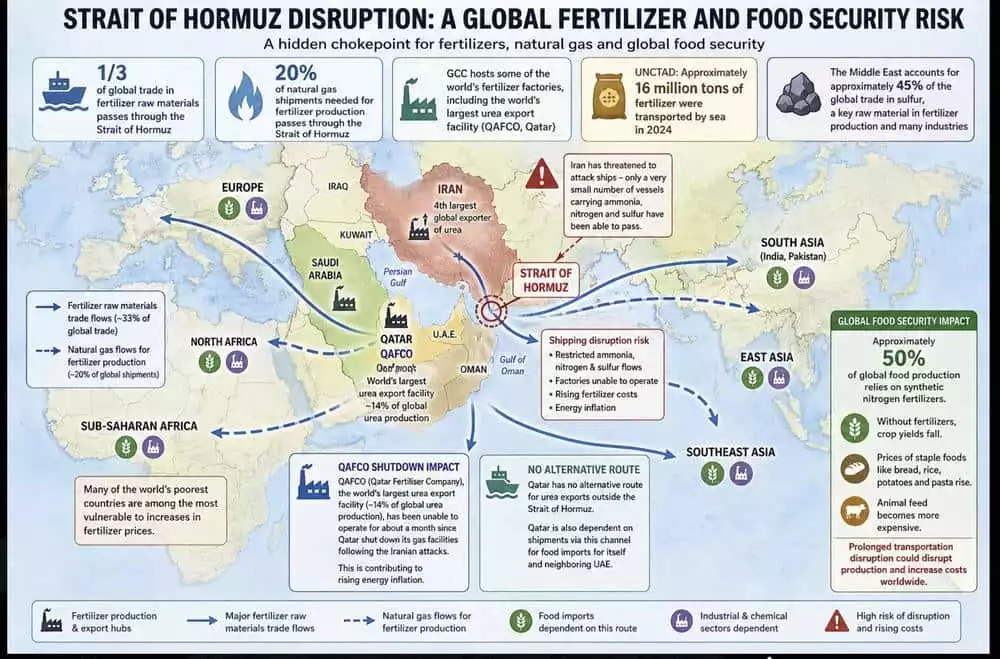
So today as Hormuz enters its third month of closure, shutting the world off from around one third of fertiliser supply and natural gas, a precursor to fertiliser, countries like Thailand who manufacture fertiliser from imported gas will also see declining production and increased pricing.
Hormuz and fertiliser
Around one third of all internationally traded fertiliser transits the Strait of Hormuz, with natural gas, a direct precursor to fertiliser production, also significantly disrupted. Attacks linked to the conflict have damaged energy and industrial infrastructure in Qatar and Bahrain, disrupting production as well as shipping.
The crisis has been made plain by Jorge Moreira da Silva, Executive Director of the UN Office for Project Services (UNOPS):
“The point of speed, as you mentioned, is a critical one. Diplomacy and nature do not have the same speed. The planting season has already started, and in most countries in Africa it will end in May. If we don’t get some solution immediately, the crisis will be very significant and severe, particularly for the poorest countries and for the poorest citizens.”
The world is waiting for a solution to Hormuz. Nature is not waiting. Food production is going to be significantly impacted, with fertilised crops producing up to 40% more output, meaning food inflation will rise accordingly.
Australia’s gas crisis leads to fertiliser failure
Gibson Island fertiliser plant closed in December 2022, citing the inability to secure fairly priced domestic gas. The Albanese government capped domestic gas prices at approximately $12 per gigajoule during Covid. That cap was never removed, and domestic gas prices have since sat at around three times the level paid in much of the rest of the world. The price signal to suppliers has been clear, and the consequences have followed: plastic manufacturing closures, glass manufacturing closures, and the shutdown of Australia’s last fertiliser producer.
And here we are in 2026, importing approximately 90% of our fertiliser, most of it through Hormuz, while research from the Australia Institute confirms the Japanese government has collected more revenue from taxing its imports of Australian LNG than Australia has collected in export taxes on its own gas. As an agricultural, natural gas producing country, the situation is stark. Farmers who have been struggling with diesel pressures are now facing fertiliser shortages and higher prices for both. With energy costs up 26% in the March GDP quarter, many will be deciding what they can actually afford to plant this year. With more mouths to feed, it is not hard to see where the next round of food inflation is coming from.
US farmers: price squeeze
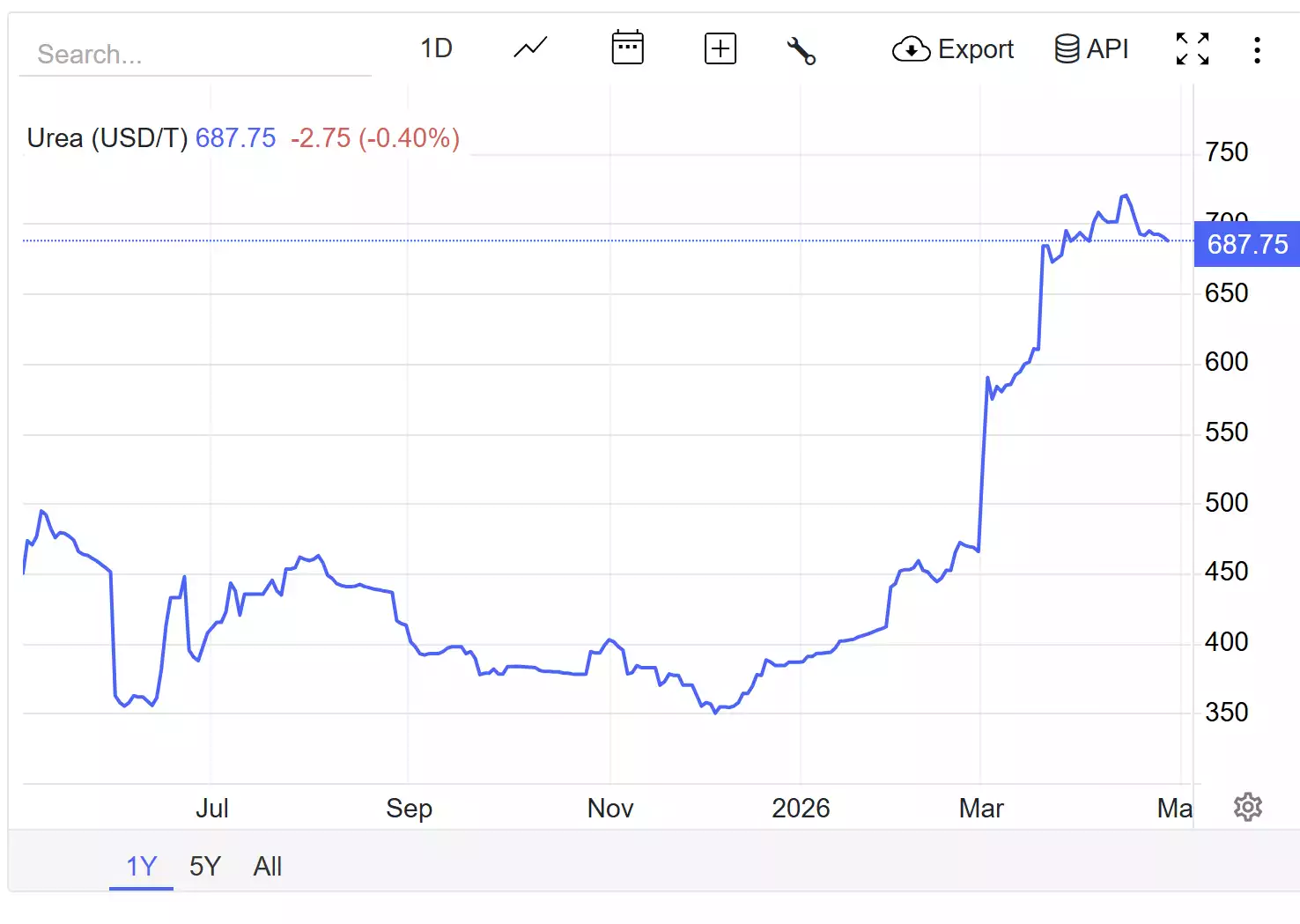
In the US, where fertiliser and gas supply are less of an issue, urea prices surged approximately 47% between late February and the end of March 2026, according to DTN retail price data.
An April 2026 survey by the American Farm Bureau Federation of more than 5,700 farmers found 70% of respondents cannot afford their full fertiliser requirements for the 2026 growing season. As AFBF President Zippy Duvall stated: “Without the necessary fertilisers, we’ll face lower yields, and some farmers will reduce acres altogether, which will impact food and feed supplies.”
So as the Hormuz situation drags on, the world simply waits for the food inflation jump and supply cliff. As Australians, it is worth asking how the lucky country ended up so exposed.
What it means for investors
Environments where food and energy inflation run ahead of official CPI figures have historically supported the case for holding real assets. Gold and silver tend to hold purchasing power through precisely these kinds of supply-driven price shocks, where the problem is structural rather than easily resolved by central bank policy.
At Ainslie Bullion, we have been helping Australians access physical gold and silver since 1974. If you would like to understand how precious metals could fit into your portfolio, our team is here to help.
This article is general information only and does not constitute financial advice. Past performance is not indicative of future results. Always conduct your own research or consult a licensed financial adviser before making investment decisions.