Approaching the Land Cycle Peak
News
|
Posted 26/02/2026
|
2919
As we approach the peak of the 18.6-year land cycle, there is an unsettling alignment between elevated spending, buoyant sentiment and deteriorating economic data.
Sentiment remains firm and spending continues to break records across multiple sectors, yet key indicators across employment and property are clearly softening.
The chart below should concern US homeowners.
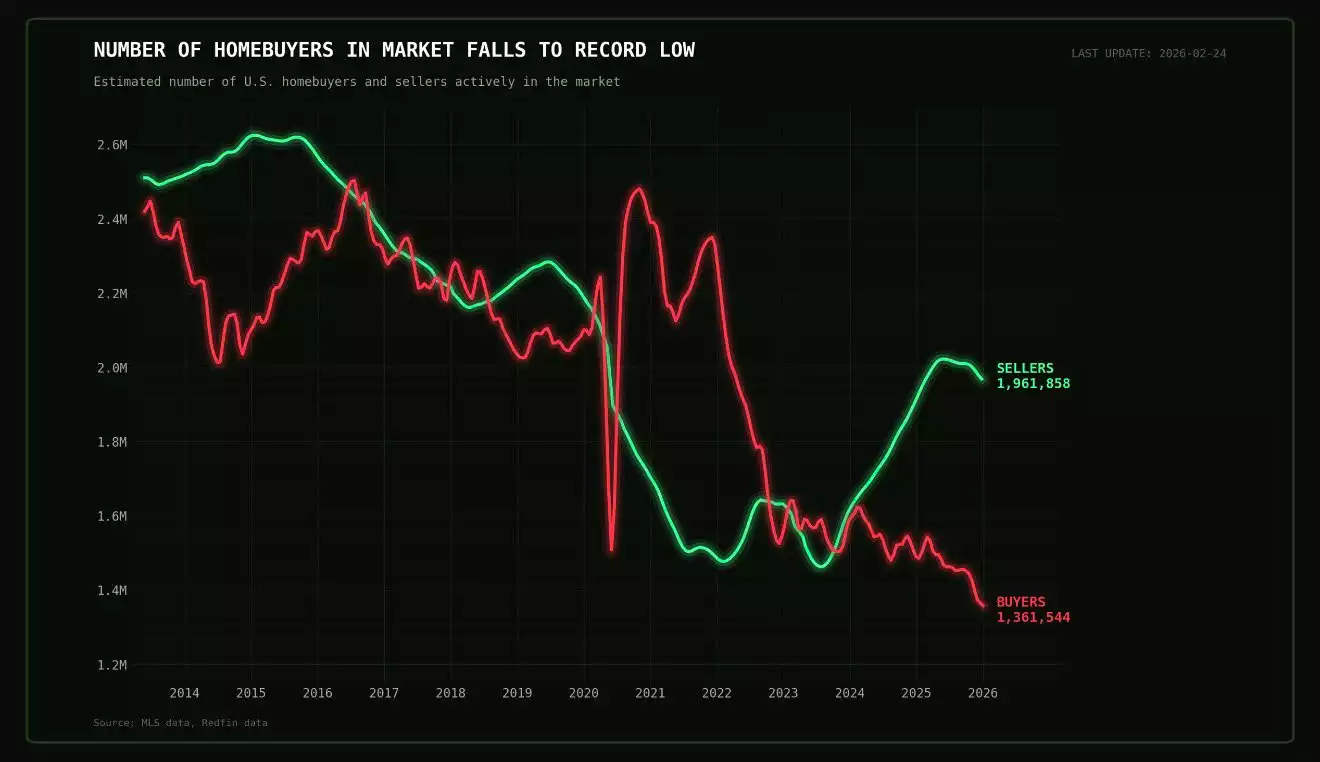
Buyers have fallen to a record low of 1.36 million, while sellers are rising quickly to nearly 2 million. This widening gap points to mounting stress in the housing market.
Many owners and investors locked into 2–3% mortgages during COVID are now facing refinancing at materially higher rates. Combined with a steadily weakening labour market, likely to accelerate with further AI adoption, this is increasing supply. At the same time, demand is drying up. With average mortgage rates near 7%, monthly repayments on a median-priced home have roughly doubled. Sellers are increasingly competing with one another.
Yet broader spending and retail sentiment remain strong.
Historically, the 18.6-year land cycle tends to peak amid record retail optimism, elevated commercial spending and a wave of “new tallest building” announcements. All are present today.
The previous peak coincided with the completion of the Burj Khalifa in Dubai. This cycle has seen similar signals:
Senna Tower – Brazil
Trump International Hotel & Tower Gold Coast – Australia
Jeddah Tower is planned to exceed one kilometre in height and, if completed, would stand at least 180 metres taller than the Burj Khalifa. Its targeted 2028 completion date is notable. 2028 also aligns with the latest expected end of the current land cycle and coincides with a Shemitah year, often associated with heightened financial instability.
The Shemitah is a seven-year Biblical cycle from the Old Testament that remains observed in Jewish tradition. While not every Shemitah year has delivered a crisis, many major financial dislocations over the past century, including the Global Financial Crisis and the Great Depression, occurred during Shemitah years.
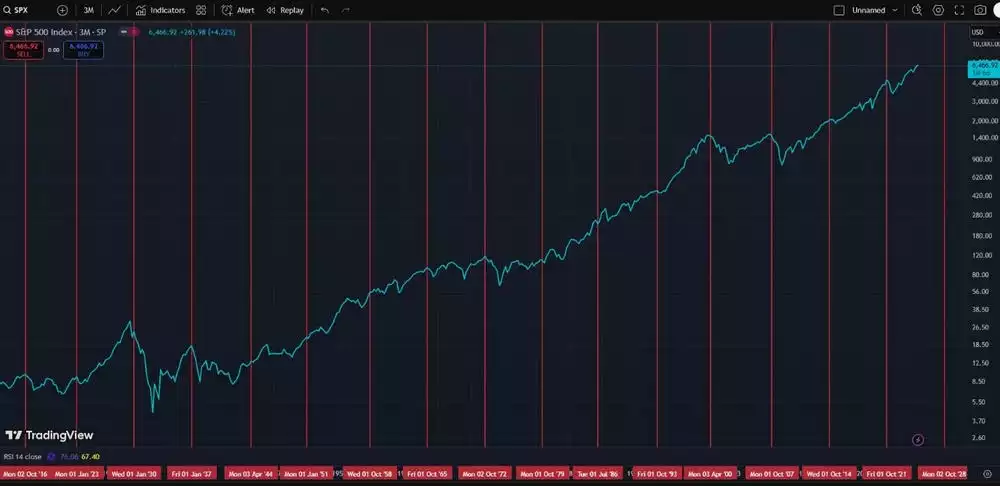
Commercial spending is also flashing late-cycle signals. The Super Bowl LX reportedly set a new benchmark, with 30-second advertising slots averaging around US$8 million.
Retail sentiment tells a similar story. The American Association of Individual Investors survey, often viewed as a contrarian indicator, shows a majority of retail investors bullish on equities over the next six months.
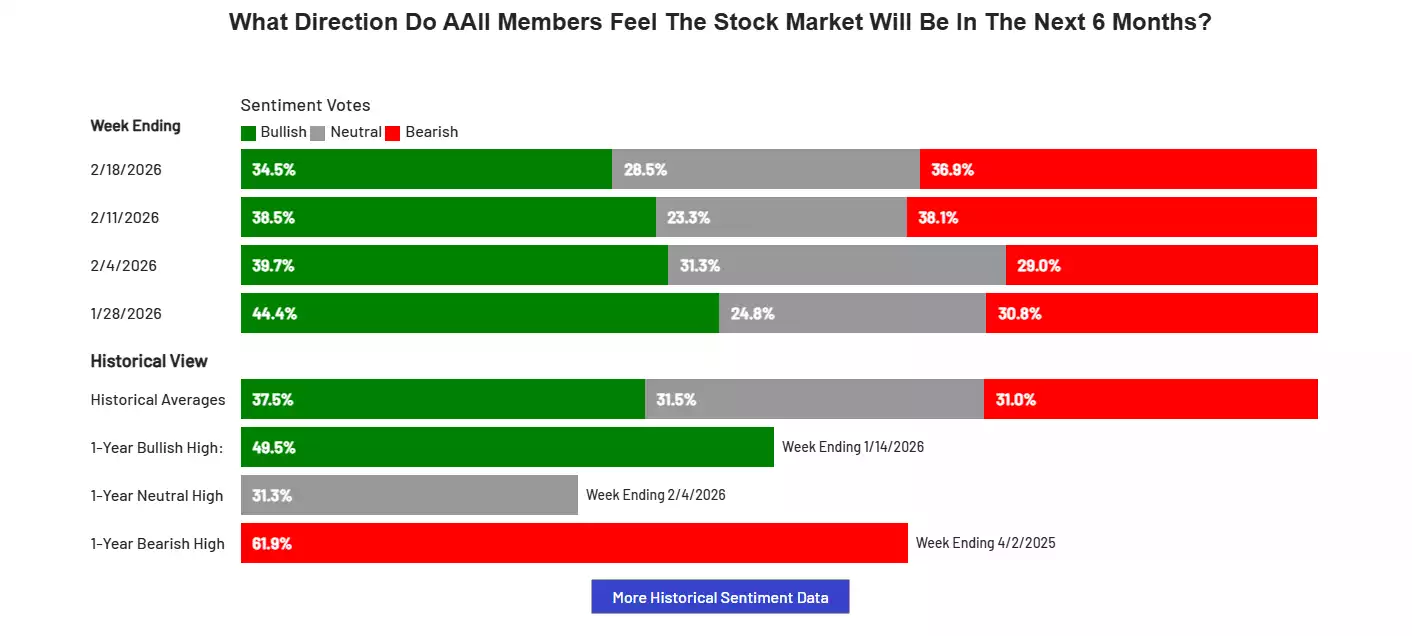
Investor sentiment, commercial spending and record-breaking property development are all consistent with a mature land cycle. At the same time, economic cracks are widening, with housing under pressure and unemployment trending higher.
Precious metals, meanwhile, are consolidating following a strong rally.
Historically, after an 18.6-year land cycle peak, equities and property tend to experience sharp corrections and prolonged recoveries. Precious metals typically see only a brief pullback before resuming their advance, often delivering strong multi-year gains.
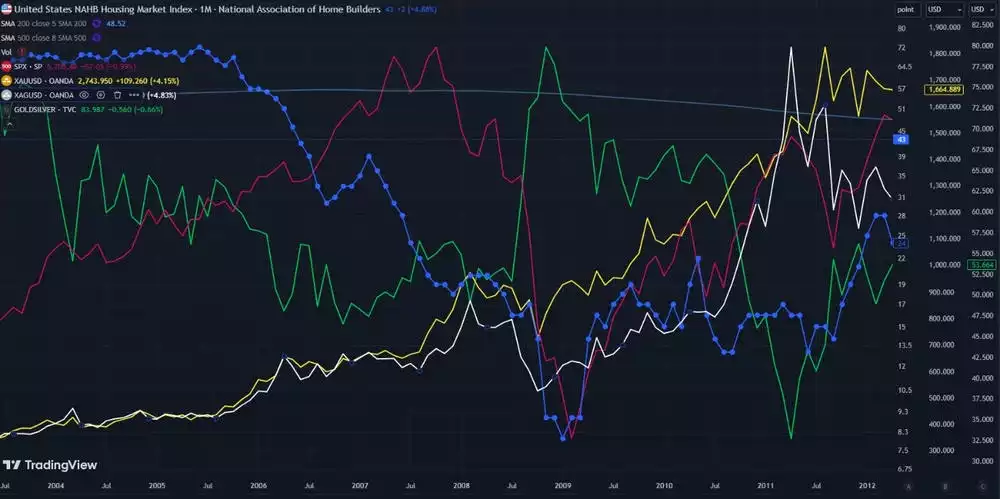
In that context, precious metals can provide both capital preservation and growth potential as one cycle transitions to the next.
This is particularly relevant for those approaching retirement near a potential cycle peak, especially investors heavily exposed through superannuation or pension funds. Establishing a Self-Managed Super Fund may offer greater flexibility and direct exposure to physical precious metals.