2027-2030 Provides Land Investors with Generational Opportunities
News
|
Posted 08/07/2026
|
2161
Key Takeaways
- The 18.6 year land cycle, averaging 18.6 years with recorded extremes of 17 and 21 years, points to a probable property peak and decline in the years ahead.
- The cycle low historically arrives around 3-4 years after the peak, placing a likely trough somewhere between 2027 and 2030.
- In the previous cycle low, gold and silver recovered first and fastest while the Gold to Silver Ratio spiked then fell away, a pattern worth watching as the next transition unfolds.
The 18.6 year land cycle is based on 300 years of land data in the UK and 200 years in the US. It affects most western economies (with some outliers always existing).
With the final years of the current land cycle reaching fruition, and most astute investors having already de-risked and de-leveraged their property portfolios, into vehicles like gold, silver and bonds, to help transition into the next 18.6 year cycle (and with the decline in property now starting to appear on mainstream media), it is an appropriate time to look forward into when the decline in property might culminate into the lows (historically coinciding with a spike in bond market volatility, reduced bond yields, interest rates being cut dramatically and most assets pulling back), to help prepare for the generational opportunity of relatively cheap land prices amid a once in a generation deflationary crash.
With cycles measured low to low, the average length being 18.6 years, the shortest and longest ever recorded being 17 and 21 years respectively, we have a high probability range of when to expect the low in land markets. While it won't feel like an opportunity when the low is being put in amid broad based financial instability, mentally preparing for it in advance will help take full advantage of the cycle pullback to establish a healthy property folio for the upcoming decades.
The chart below shows 17, 18.6 and 21 years from the Global Financial Crisis low (the culmination of the previous land cycle).
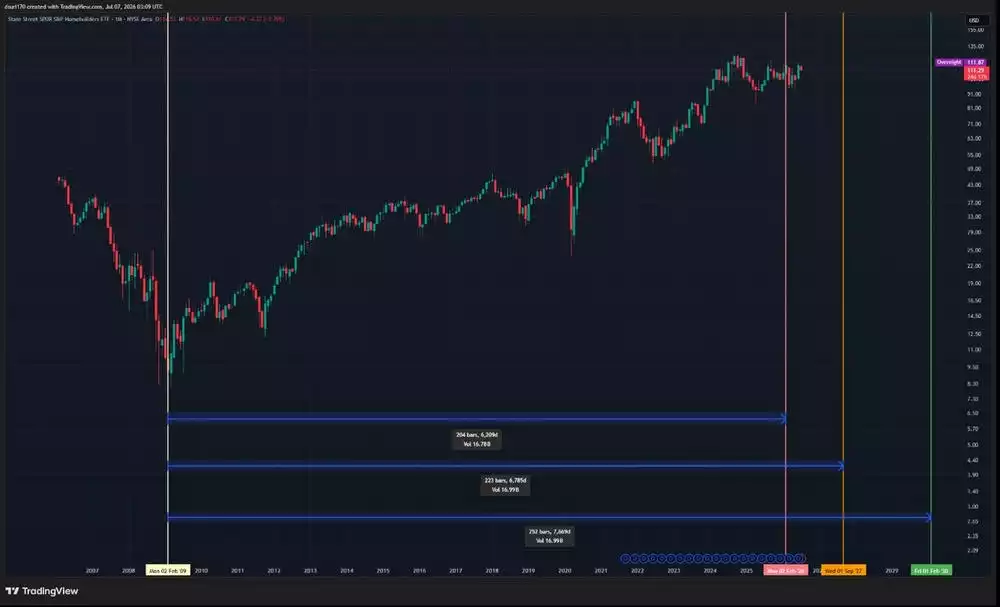
As the declining phase lasts around 4 years on average (the shorter the decline phase, the steeper the decline into the lows) an average cycle length forming a low around September of 2027 would lead to quite a sharp decline over a shorter period.
Expecting a pullback in 2027 with a low somewhere between 2027 and 2030 is highly probable based on the 300 years of precedence.
While many get caught off guard around the peak, or swept up in emotions during the lows, building the expectation on historical precedent allows clear and calm navigation of these cycles.
Looking at how gold, silver, the Gold to Silver Ratio, and stocks behaved into the previous land cycle lows also helps create a realistic expectation of how precious metals, as vehicles to navigate this transition, may behave during it.
The chart below shows gold and silver recovering first and fastest after the pullback with the Gold to Silver Ratio (green) spiking during the pullback and falling off a cliff after, meaning gold declines the least during the pullback and silver outperforms gold coming out of it.

This article is general information only and does not constitute financial advice. Past performance is not indicative of future results. Always conduct your own research or consult a licensed financial adviser before making investment decisions.